


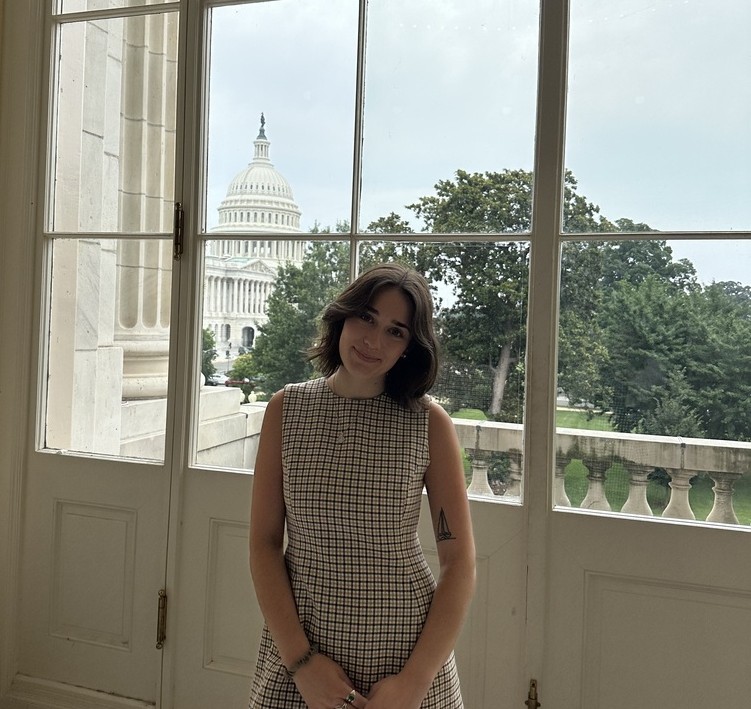
Abby Bendersky, a political science major with a criminology minor at Colorado State University, spent her summer as a legislative intern in the U.S. House of Representatives, working for Congressman Joe Neguse through The Washington Center’s Academic Internship Program. She drafted cosponsor requests on animal welfare legislation, led Capitol tours and built a professional network from scratch on Capitol Hill.
In Her Own Words
Why did you apply to The Washington Center?
I am a political science major with a criminology minor at Colorado State University, and I applied to the Academic Internship Program because I always knew I wanted to live and work in Washington, D.C. for a semester. Finding a program that guided me through the internship application and interview process was a dream come true. Searching for housing and applying to internships on my own felt incredibly daunting, and TWC made it easy to sort through opportunities and manage the whole application process.
What were you working on at your internship?
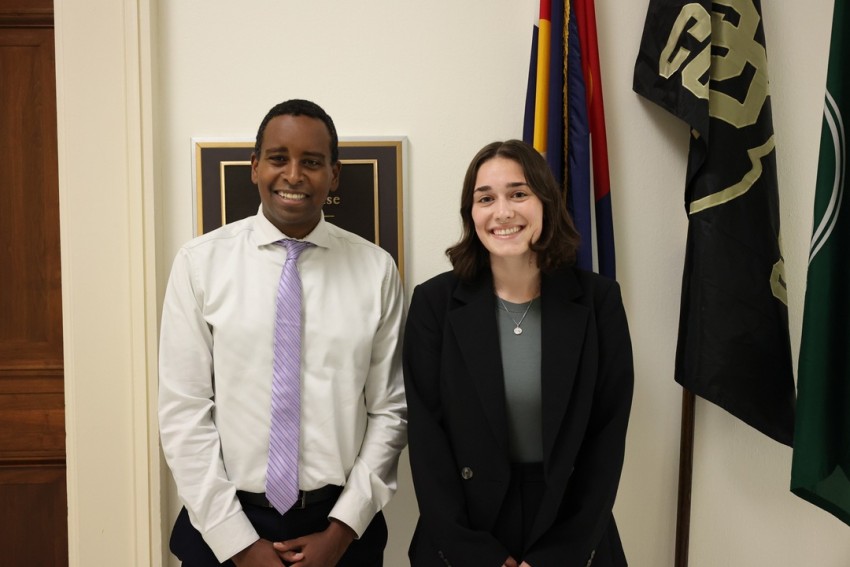
I was a legislative intern in the U.S. House of Representatives, working for Congressman Joe Neguse, who represents Colorado’s 2nd Congressional District.
Every day, the interns’ main responsibility was answering the phones and speaking with constituents, along with sorting the hundreds of emails the congressman receives daily. Callers mostly wanted to voice their opinion on a specific issue and share how they hoped he would vote. We also sorted physical mail, drafted cosponsor requests for bills, attended briefings and wrote corresponding memos, greeted guests meeting with staffers and, my favorite part, led Capitol tours.
The project I am most proud of was drafting cosponsor requests on an issue I want to pursue in my career: animal welfare. I drafted three animal welfare cosponsor requests, which are brief summaries that give the congressman quick facts and list the other members who have signed on. The House is currently in recess, so he has not had the chance to sign on yet, but I am excited to see if he does.
What networking skills and connections did you build on Capitol Hill?
TWC stresses networking, and even though I started out knowing almost nothing about building a professional network, I left with real connections and the confidence to talk about myself professionally.
Using the networking skills TWC taught me, I had productive coffee chats with many of the legislative assistants in my office, where I could talk through what I pictured for my future and get genuinely helpful advice. I also had the chance to join an intern chat with Congresswoman Joyce Beatty, who was eager to share her experiences and advice. As uncomfortable as networking can feel, it really does open doors you never knew were there.
What were you worried about before your D.C. internship, and how did you work through it?
My two biggest worries were that I had been accepted into the program without an internship yet, and that I would not be at the professional level my role required, and both fears turned out to be manageable.
In the months leading up to my TWC summer, I kept getting more stressed that I would not find an internship. What helped was realizing that TWC’s programming runs alongside the internship application process but may not line up perfectly with yours. I was learning interview tips from TWC before I had even been offered an interview and worried I was behind, when really every internship office is on its own separate track that has nothing to do with your pace.
I was also worried I would not be smart or experienced enough for the role. It helped to learn that there is no expected level of knowledge and that you learn as you go. I knew virtually nothing about how the House of Representatives works, and I learned so much once I was there. The coordinators who interview you usually become your boss, and they are there to guide you. On the Hill especially, many coordinators were interning themselves a couple of years ago, so they really understand what it feels like to step into a completely new environment.
What’s one internship moment you won’t forget?
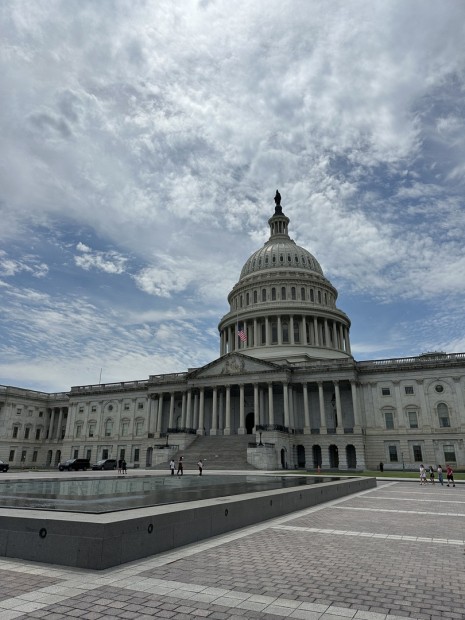
I walked through the tunnels beneath the Capitol, House and Senate to get home from work every day. One afternoon, as I was boarding the underground subway, I saw Senator Bernie Sanders walking back to his office after a vote. I was on the phone with my dad and literally said, “Oh my gosh, that’s Bernie Sanders.” He heard me, turned, and waved. It is an only-in-D.C. moment that I will never forget and can’t believe actually happened.
What’s your advice for students on the fence about applying?
If you are on the fence, reach out to TWC and ask them to connect you with an alum.
I was able to speak with an alum who interned through TWC the summer before, and she answered all of my little ‘living in D.C.’ questions along with my worries about the job search. I also found an incredible roommate through the roommate portal, which made the whole experience much better. You are at work often, and there are plenty of chances to meet others in your building too, but there is something special about living with people going through the same experience as you.
Related Reading
How Bianca Talarico Went from the National Security Seminar to Advocating on Capitol Hill
Frequently Asked Questions
What happens if I’m accepted to The Washington Center before I have an internship?
That is the normal sequence, not a warning sign. Acceptance into the Academic Internship Program comes first, and the internship search runs after it, starting roughly three months before you arrive in D.C. You work with a career coach on your résumé, interview practice and search strategy, and TWC guarantees an internship offer for students who complete the process and meet deadlines. Abby Bendersky named this as one of her two biggest worries before her summer, and what resolved it was understanding the timing: “TWC’s programming runs alongside the internship application process but may not line up perfectly with yours. I was learning interview tips from TWC before I had even been offered an interview and worried I was behind, when really every internship office is on its own separate track that has nothing to do with your pace.”
Can you get a congressional internship through The Washington Center?
Yes, Capitol Hill placements are among the most competitive TWC offers. Abby interned as a legislative intern in the U.S. House of Representatives. Demand for Hill positions runs highest in the summer, and eligibility rules are set office by office rather than by TWC: some members give preference to applicants from their state or congressional district, and others have no such requirement. If you have a specific member in mind, check that office’s internship requirements early. Treat the search as a competitive professional application: strong writing, attention to detail, a demonstrable interest in government or policy and a clear reason why that particular office. Apply to several, and stay flexible about the kind of office you would accept.
What does a legislative intern in the U.S. House of Representatives actually do?
Mostly constituent communication, plus real legislative support. Abby’s daily work was answering phones and speaking with constituents who called to say how they hoped the congressman would vote, and sorting the hundreds of emails the office received each day. Beyond that: sorting physical mail, drafting cosponsor requests for bills, attending briefings and writing memos on them, greeting guests meeting with staffers, and leading Capitol tours, which she names as her favorite part of the job. The project she was proudest of was drafting three cosponsor requests on animal welfare, the issue she wants to build a career around. A cosponsor request is a brief summary giving the member quick facts on a bill and listing which other members have already signed on. Congressional interns are not spectators. The work is how you learn where constituent services, legislation and communications actually connect.
Do you need prior experience to intern on Capitol Hill?
No, and you are not expected to arrive knowing how Congress works. Abby had almost no working knowledge of the House of Representatives before she started, in her words: “I knew virtually nothing about how the House of Representatives works, and I learned so much once I was there.” She also points out something students rarely hear: the coordinator who interviews you usually becomes your supervisor, and on the Hill many coordinators were interns themselves a couple of years ago, so they know exactly what stepping into that environment feels like. What the job asks of you is willingness to learn, initiative, professional communication and the nerve to ask when you do not understand something.
How do you build a professional network if you don’t know anyone in D.C.?
You start with the people already in your office. Abby began the summer knowing almost nothing about building a professional network. She used the networking training TWC provides to set up coffee chats with the legislative assistants in her own office, where she could talk through what she wanted from her career and get direct advice from people a few years ahead of her. She also joined an intern conversation with Congresswoman Joyce Beatty. Her assessment: “As uncomfortable as networking can feel, it really does open doors you never knew were there.” If you are on the fence about the program itself, she suggests asking TWC to connect you with an alum before you apply.
If the gap between where you are and where the job seems to be is what is stopping you, that gap is the point of an internship.
About the Author
Follow on Twitter Visit Website More Content by The Washington Center


