How are members of The Washington Center community stepping up to help during the coronavirus pandemic? That’s what we set out to learn through a series of interviews with alumni who are aiding the nation’s efforts to address the crisis.
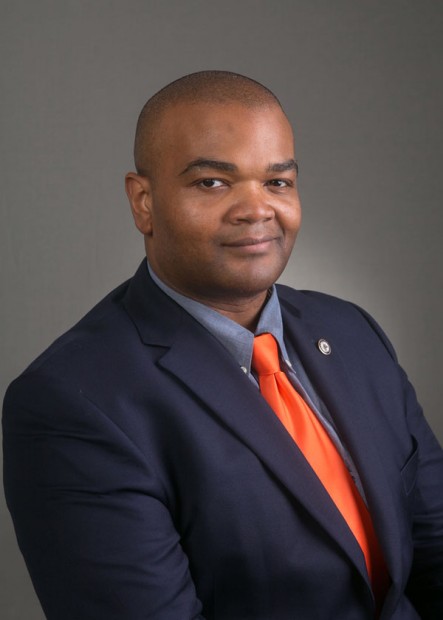
Vegas Curry, a member of the initial VET Initiative cohort in the summer of 2017, knew he couldn’t stay on the sidelines while COVID-19 ravaged public health. The Navy veteran recognized the need for testing was an opportunity to put his public health and safety training into action for the benefit of others. Applying his civilian and military backgrounds, he volunteers with sample collecting when not addressing D.C. public health in his position with HSEMA.
What is your current position and what was a normal, pre-COVID 19 day like?
I’m an emergency operations and information specialist with D.C. Homeland and Emergency Management Agency (HSEMA). The organization serves as a public and first responders — fire, police, EMS, other D.C. agencies — go-between. Pre-COVID-19 we were routinely transferring information between agencies and the public, in one direction or the other, to plan and coordinate D.C. security and safety efforts.
What is your job like now? How are you helping to address the crisis?
Most of our work has been concentrated on dealing with the virus. Pretty much every task or interaction we’ve had lately has been virus-related or public health-related. We’re trying to get trusted information out to the public while at the same time keeping first responders safe and equipped with the best, most up-to-date information possible.
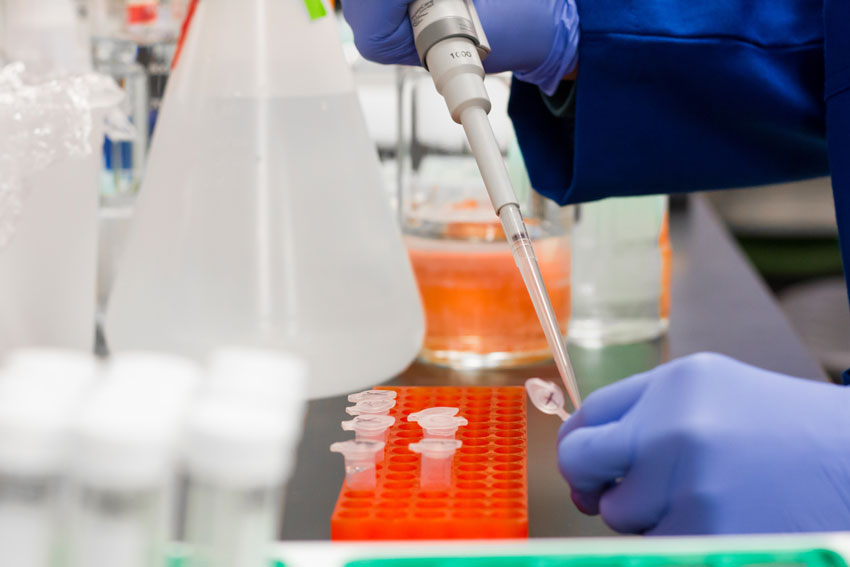
In my volunteer work, I work with the Medical Reserve Corps. It’s a volunteer organization helping DC Health do coronavirus testing. Due to the scarcity of resources, testing has been conducted Monday-Wednesday-Friday at two different locations in the District of Columbia. Sampling is done in two-person teams: one person collects the sample from the patient and then passes it on to the second person who packages it and maintains the chain of custody. The sample is sent to be bulk collected and then shipped to the testing center.
This effort was put together with George Washington University Hospital students and staff doing sample collections and the medical or non-medical volunteers handling logistics. As a non-medical volunteer, I’m the second part.
Everyone has a stake in the situation that we are in, both locally and nationally. This is not something where a person can stay on the sidelines; the stakes are too high.
Vegas Curry
What advice or tips do you have to share with the TWC community for the current situation?
I didn’t want to stand on the sidelines considering the amount of training I’ve had. I’ve had a ton of training in public health and public safety sampling at the Center for Domestic Preparedness in Alabama. The center gets first responders ready to deal with biological or chemical warfare agents. But you don’t need special training to act.
Everyone has a stake in the situation that we are in, both locally and nationally. This is not something where a person can stay on the sidelines; the stakes are too high. It’s an unfortunate situation, but I would implore everyone to do whatever they can, from donating money to a good cause to volunteering hours to help others through the crisis to going out to take samples or helping with logistics to set up a testing site. There’s a huge opportunity to help.
Everybody can do their part. I like to think that’s what I’m trying to do in my volunteer position. We’re all in this together.
Have a story about how you’re helping address the coronavirus outbreak you’d like to share with us? We’d love to hear from TWC alumni, students and partners about their actions. Contact us at communications@twc.edu.
Sophia
Yeganeh
Master of Arts in Global Public Policy
MAGPP ’26
B.S. Philosophy, Political Science & Economics (PPE)
Suffolk University ’25 • Honors Program
I believe in an America like the one I was taught about growing up; one with deep flaws, but a country capable of embracing the power of community, diversity, hard work, and the commitment to improve.
Photo
On Washington, Public Service & What It Means to Care
Sophia Yeganeh has made the trip to Washington, DC twice now — and each time, something shifted. A Suffolk PPE Honors graduate heading into her Master of Arts in Global Public Policy, she reflects on what changed, what surprised her, and why she believes that understanding the world is not just an academic pursuit — it’s a moral imperative.
It was very interesting to reflect on how my first trip made me feel. Being at TWC in 2024 allowed me to see what I had been studying in practice. That trip was a true catalyst for many of the choices I came to make.
Seeing in real time where such important and consequential decisions are being made — and seeing those who make them in the flesh — was an extremely influential part of my life.
I was curious to see how it would compare to the last time I was there in 2024. I wanted to be in DC and hear directly about what is happening at this particular moment.
One of the biggest differences that surprised me was noticing that more people across the aisle seemed to agree at the panels in this seminar. The last time I attended, Democrats and Republicans had more opposing views on issues like gun control and security. This time, there was more agreement on the challenges we are all facing today. I was both comforted and deeply unsettled by that.
It makes an incredible impact to see so many Suffolk alumni working in Washington, DC, doing world-changing work. I was able to reconnect with many people who I had the privilege of meeting before, and that was really special.
Seeing so many alumni and their incredibly successful careers instills what is possible after graduation, and I have trust and faith that those people would be there for me if I ended up back in DC. I am so thankful for all of the Suffolk alumni who have paved the way!
The saying goes that you learn something new every day, and I find that to be an understatement. This experience reinforced just how much there is to learn — and how important it is to care.
This degree and this experience are both important to me because they expand my ability to understand the world around me. I especially value studying major global issues and forms of global governance. There are global challenges that affect all of us, and they are also problems without consensus. Navigating them will not be easy, but it will not be optional either.
I love what I get to study because it matters. I’m fascinated by systems, institutions, influential actors, and the many ways policy priorities are organized in our world. I care about understanding how agendas are set and how norms are created and upheld.
I want to be a well-rounded global citizen and an advocate for what is right. Being able to understand, analyze, and write public policy will benefit me throughout my career, and I’m incredibly grateful to my professors for breathing so much life into their students.
About the Author
Follow on Twitter Visit Website More Content by The Washington Center