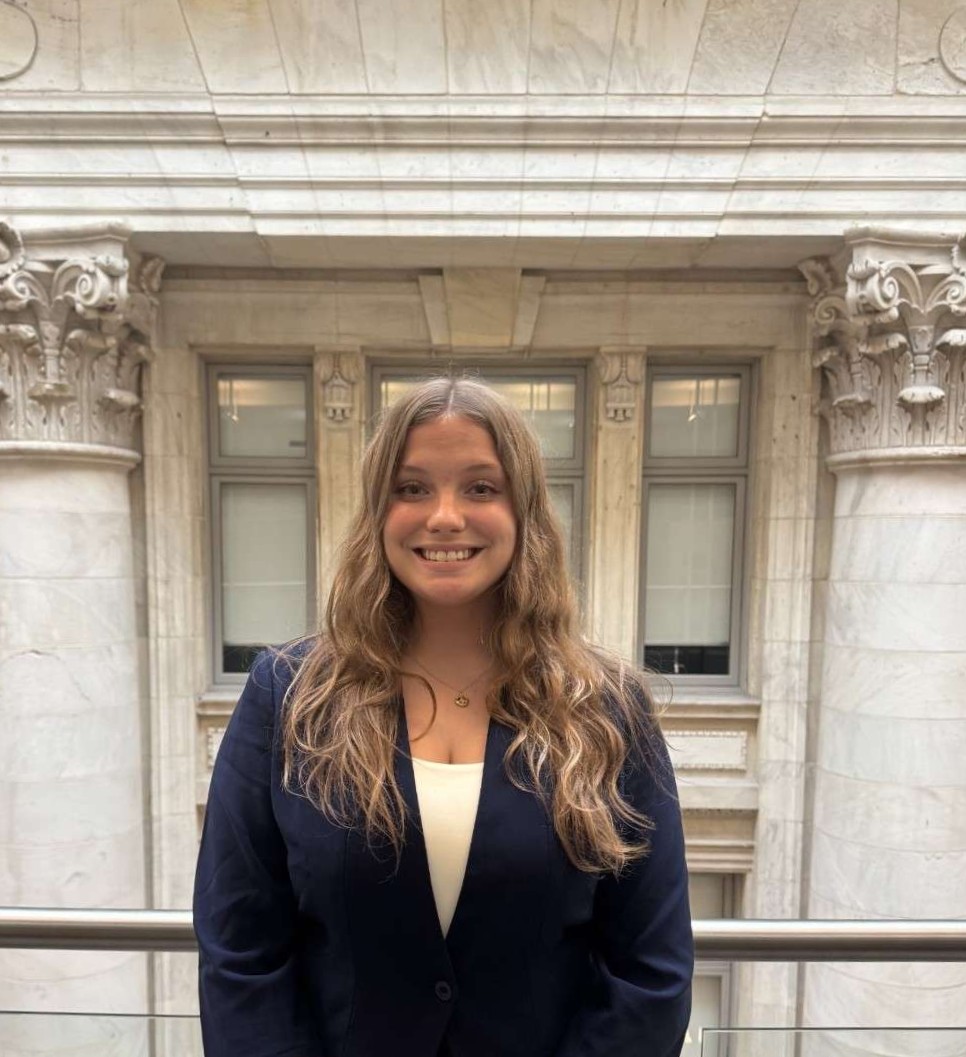
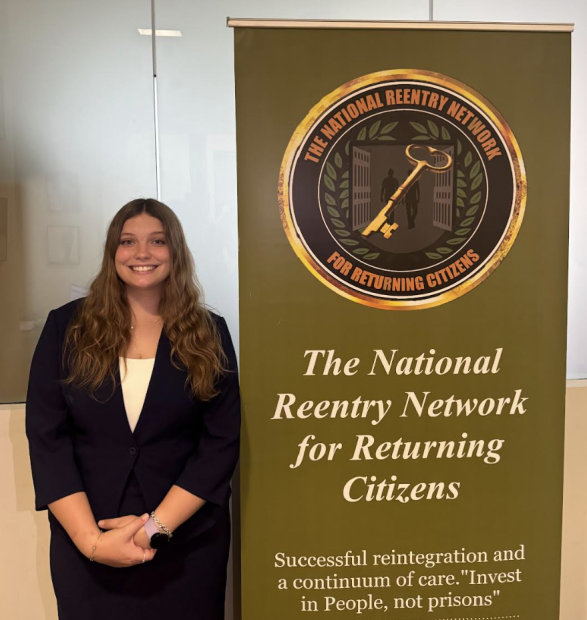
Cassidy Jacobs, a political science major at the University of Colorado Boulder, spent her summer in Washington, D.C. interning with The National Reentry Network for Returning Citizens (NRNRC) through The Washington Center's Academic Internship Program. She conducted policy research, advocated at the D.C. Council and published two articles in NRNRC's Black Table Talk Magazine.
Why apply to The Washington Center for a D.C. internship?
I applied because the program was highly recommended by my university and offered the opportunity to gain professional experience while living in Washington, D.C. I knew I wanted to immerse myself in public policy and nonprofit advocacy, and this experience became one of the most rewarding parts of my college journey.
What does a criminal legal advocacy and policy intern at a nonprofit do?
I conducted policy research and data analysis, created outreach materials, met with clients and advocated for legislation alongside nonprofit leaders.
Every day was different, allowing me to contribute in meaningful ways across the organization. I also met with clients, assisted with resumes and cover letters and participated in community outreach. Some of my most impactful experiences took place beyond the office. I visited the D.C. Jail to inform incarcerated individuals about reentry resources available upon their release and advocated for returning citizen legislation at the D.C. Council alongside nonprofit leaders and community advocates.
What was the biggest project you handled as a policy intern?
I wrote two articles for NRNRC's Black Table Talk Magazine on the U.S. carceral system and returning citizen legislation.
In "Invest in People, Not Prisons: Reclaiming Humanity in a System Built on Disposability," I examined the organization's guiding philosophy while exploring the systemic inequalities embedded within the U.S. carceral system. My second article, "The Importance of Returning Citizen Legislation in the D.C. Council," analyzed how local legislation can expand access to employment, civic participation and other essential resources for returning citizens rebuilding their lives. Both will be published later this year.
What was the most meaningful part of the internship?
Meeting individuals directly impacted by the justice system gave me a much deeper understanding of the barriers returning citizens face.
Seeing policy discussions firsthand while meeting individuals directly impacted by the justice system gave me a much deeper understanding of the barriers returning citizens face and the importance of effective reentry support. A conversation with NRNRC CEO Mr. Courtney Stewart stayed with me: "You are one conversation away from a changed perspective." That advice is a reminder that every conversation has the potential to challenge assumptions, inspire growth and create meaningful change.

What skills do you build in a D.C. policy and advocacy internship?
I strengthened policy research, writing, data analysis and public engagement, along with Canva and grant data management.
Throughout the summer, I developed valuable professional skills that I will carry with me throughout my career. I also expanded my communication and public engagement skills by helping film episodes of NRNRC's Black Table Talk Podcast. I had the opportunity to connect with D.C. councilmembers, nonprofit professionals, community leaders and advocates working in criminal justice reform.
How do you handle nerves about moving to D.C. for an internship?
Careful budgeting and finding great roommates through TWC’s housing portal made the biggest difference.
Before arriving in Washington, D.C., I had never visited the city and spending ten weeks away from home was something entirely new for me. I was also nervous about the financial commitment since I did not receive a scholarship and knew D.C. could be an expensive place to live. Careful budgeting helped me manage expenses, but what made the biggest difference was finding wonderful roommates through TWC’s housing portal. They quickly became close friends and made the transition much easier.
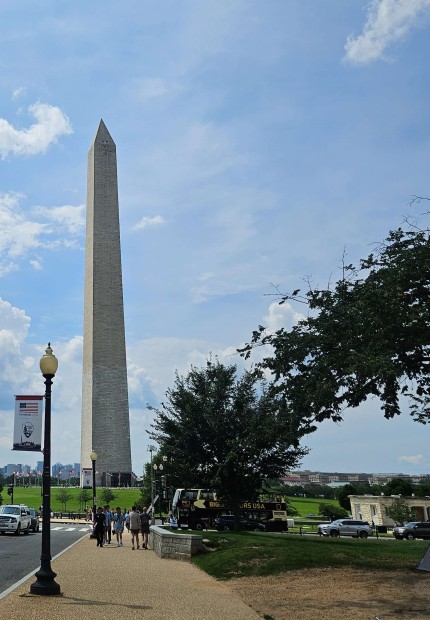
What is one D.C. moment you will never forget?
Visiting three Smithsonian museums and the Washington Monument in a single day during my first weekend.
It perfectly captured what makes Washington, D.C. such a unique place. Everywhere you turn, there are opportunities to experience history, government and culture in ways that simply are not possible anywhere else.
Is The Washington Center worth it for political science majors?
Yes. It gave me the confidence, skills and network to pursue a future career in Washington, D.C.
My biggest advice for anyone considering applying is to apply early, be strategic about the internships you pursue and choose opportunities that genuinely align with your interests and career goals. Some of my most memorable experiences, including advocating at the D.C. Council, visiting the D.C. Jail, publishing research for Black Table Talk Magazine and building relationships with inspiring leaders, were experiences I never could have anticipated before arriving. This summer challenged me academically, professionally and personally and it reaffirmed my passion for public service.
If you're trying to figure out whether an internship in Washington, D.C. is right for you, don't stop with one student's story. The Washington Center has spent 50 years helping students turn classroom learning into professional experience, and our resources are filled with advice from the thousands of students who have done it. Explore our Academic Internship Program and read firsthand student experiences and advice.
Frequently Asked Questions
Who are the right candidates for the Academic Internship Program?
Internships are no longer optional. They are close to a prerequisite. Employers are moving away from GPA as a screening tool and toward real, hands-on experience as one of the clearest signals of what a candidate can actually do. In today's market, an internship is often the deciding factor in whether you get hired at all.
The Academic Internship Program is designed for college students who want to gain professional experience in Washington, D.C., while connecting their academic interests to real-world work. Students come from a wide range of majors and backgrounds and can pursue internships across government, nonprofits, advocacy, business, communications, policy, technology and other fields.
You do not need to have your entire career mapped out before participating. An internship can be an opportunity to test your interests, develop professional skills and discover career paths you may not have considered.
That said, we also recognize that this program isn't for everyone. It requires commitment, ambition and the willingness to step up and take control of your professional future. If you're ready to do the work, to learn and to grow, this could be the experience that transforms the trajectory of your life.
What if I don't feel qualified for an internship?
Feeling unsure about whether you are qualified is common, especially if this would be your first professional internship. You are not expected to arrive in Washington knowing everything about your field. Internships are designed to give students an opportunity to learn while contributing to a professional organization. Employers may look for strong communication skills, curiosity, reliability, a willingness to learn and the ability to take initiative rather than expecting students to already be experts.
Instead of asking whether you meet every possible qualification, consider whether you are ready to learn, ask questions, accept feedback and take responsibility. Those qualities can be just as important as previous experience.
Can I apply for internships outside my major?
Yes. Your major does not have to determine the type of internship you pursue in Washington, D.C. Academic skills such as research, writing, analysis, communication, organization and critical thinking can transfer across industries and professional settings. A political science major, for example, might pursue an internship in government, but could also explore communications, nonprofit management, advocacy, marketing, public affairs or another field.
An internship can also be a way to test a career interest that is different from your coursework. The goal is to find an experience where you can apply what you know, develop new skills and explore where those skills might take you.
How competitive are Washington, D.C. internships?
The competitiveness of a Washington, D.C. internship varies considerably by organization, field, time of year and the number of available positions. Well-known organizations and highly sought-after fields can attract a large number of qualified applicants and summer is particularly more competitive.
The Washington Center offers a direct introduction to our partner employers, and we’re able to advocate for you as a candidate. You’ll have an advisor throughout your internship search process, offering tailored advice, helping you polish your application materials, prepping you for interviews and working with you to secure an internship offer.
About the Author
Follow on Twitter Visit Website More Content by The Washington Center