



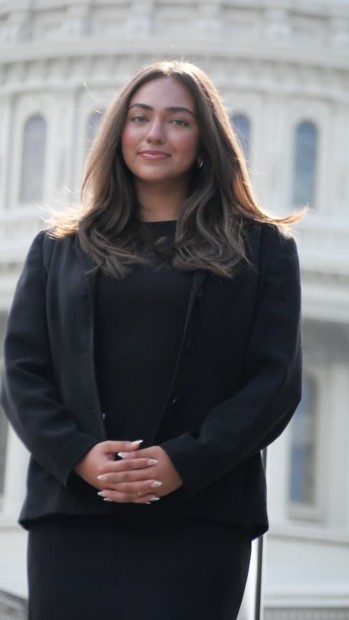
Ahiza Carillo, a criminal justice major at the University of Arizona, spent her summer as an outreach intern at Multicultural Community Service through The Washington Center’s Academic Internship Program.
She built skills in community outreach, research and marketing, connected with nonprofit professionals working in the field she wants to enter and made the summer possible with a scholarship from her university.
In Her Own Words
Why did you apply to The Washington Center as a criminal justice major?
I applied to the Academic Internship Program to gain professional experience and network with professionals in my desired field. I also valued the chance to have the support of other interns from across the country, along with TWC advisors, throughout the experience.
What were you working on at your internship?
I interned with Multicultural Community Service (MCS) supporting outreach and marketing efforts through research, organizing client activities and community engagement. One project I am proud of was creating a composite list of client activities that helped the team better understand engagement and identify opportunities for future outreach.
What skills and connections did you gain?
I strengthened my skills in community outreach, research, marketing and organizing information, while gaining hands-on experience with tools like Excel and Canva. I also connected with MCS staff, community partners and other professionals working in nonprofit and community services, building relationships in exactly the field I want to work in.
What were you worried about before coming to D.C., and what actually helped?
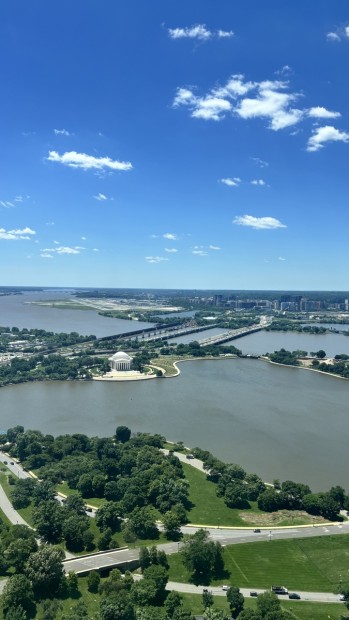
Coming from Arizona, my biggest worries were navigating public transportation, managing cost and not knowing what to expect from my internship, but each one became manageable.
I was especially nervous about the Metro and public transportation, so I leaned on my TWC advisor for tips and gradually became comfortable getting around the city on my own. To help with cost, I learned to budget carefully, and meal prepping was one of the biggest things that helped me save money. As for the internship itself, I was not sure what to expect, so I made an effort to keep an open mind, get involved and take advantage of networking opportunities and experiences outside of my day-to-day work.
How did a scholarship make your internship possible?
I received a scholarship from the University of Arizona School of Government and Public Policy, which made this entire experience possible. Without that support, I would not have been able to have the transformative and unforgettable summer I had in Washington, D.C.
Looking back, what did the summer give you?
During my internship with MCS, I had the opportunity to support community outreach efforts, connect with diverse communities and gain valuable experience in the nonprofit sector. Living and working in D.C. allowed me to grow professionally, build meaningful connections and experience public service in a way that cannot be taught in a classroom. As a criminal justice student, this experience reinforced my passion for serving others and making a positive impact in my community.
Related Reading
- Sample Criminal Justice Internships Outside of Law Enforcement
- Top 5 Mistakes Students Make When Evaluating Internship Compensation
Frequently Asked Questions
How much does it cost to intern in Washington, D.C. for a summer, and how do students manage it?
Your cost depends on where you go to school, and it is often comparable to a term on campus. Because TWC partners with individual colleges and universities, your campus liaison and financial aid office are the fastest way to find your actual number. Day-to-day living costs are a separate question, and they are the ones students tend to underestimate. Ahiza Carillo, who came to D.C. from Arizona, named cost as one of her three biggest worries before arriving and handled it directly: “I learned to budget carefully, and meal prepping was one of the biggest things that helped me save money.” Full fee tables are on the Academic Internship Program page.
Do I need a car to intern in Washington, D.C.?
No. Washington, D.C. is served by Metrorail and Metrobus, and interns commute to sites across the city on public transit. If that feels intimidating from out of state, it is a common worry rather than a disqualifying one. Ahiza was more nervous about the Metro than about the internship itself: “I was especially nervous about the Metro and public transportation, so I leaned on my TWC advisor for tips and gradually became comfortable getting around the city on my own.” Worth factoring into your budget: roughly 70 percent of TWC internship partners offer some form of compensation, which for some sites takes the form of transportation fare.
Is The Washington Center a good fit for criminal justice majors?
Yes, and the placement will not necessarily be in law enforcement. Ahiza is a criminal justice major at the University of Arizona, and she spent her summer at Multicultural Community Service doing outreach and marketing work: research, organizing client activities and community engagement, using Excel and Canva day to day. Criminal justice coursework maps onto a wide range of D.C. organizations working in policy, advocacy, nonprofits and community services, not just policing and corrections. For a fuller picture, see sample criminal justice internships outside of law enforcement.
What does a nonprofit outreach intern actually do?
An outreach intern connects the organization to the people it serves. At Multicultural Community Service, that meant research, organizing client activities and community engagement for Ahiza, plus a project she singled out as the one she was proudest of: a composite list of client activities that helped the team understand engagement and spot opportunities for future outreach. Outreach work typically builds research, project organization, relationship building, written communication and event coordination skills, which transfer across nonprofit, government, policy and communications careers. It also gives you a closer look at how organizations work with specific communities than a classroom can.
Closing Takeaways
Ahiza named three worries before she left Arizona: the Metro, the money and not knowing what the internship would ask of her. None of them turned out to be the real story. She spent the summer building outreach research, learned Excel and Canva on the job and built relationships with people working in the exact field she wants to enter. The obstacles were logistics. She solved them with an advisor, a budget and a meal prep routine.
If cost is the thing standing between you and a semester in D.C., start with your own campus. Ask your liaison and your financial aid office what is available, then apply and let TWC consider you automatically for its own awards. Applications for the spring, summer and fall 2027 Academic Internship Programs are open now and the early deadline for summer 2027 on December 2, 2026. You can apply here or request more information.
About the Author
Follow on Twitter Visit Website More Content by The Washington Center


