


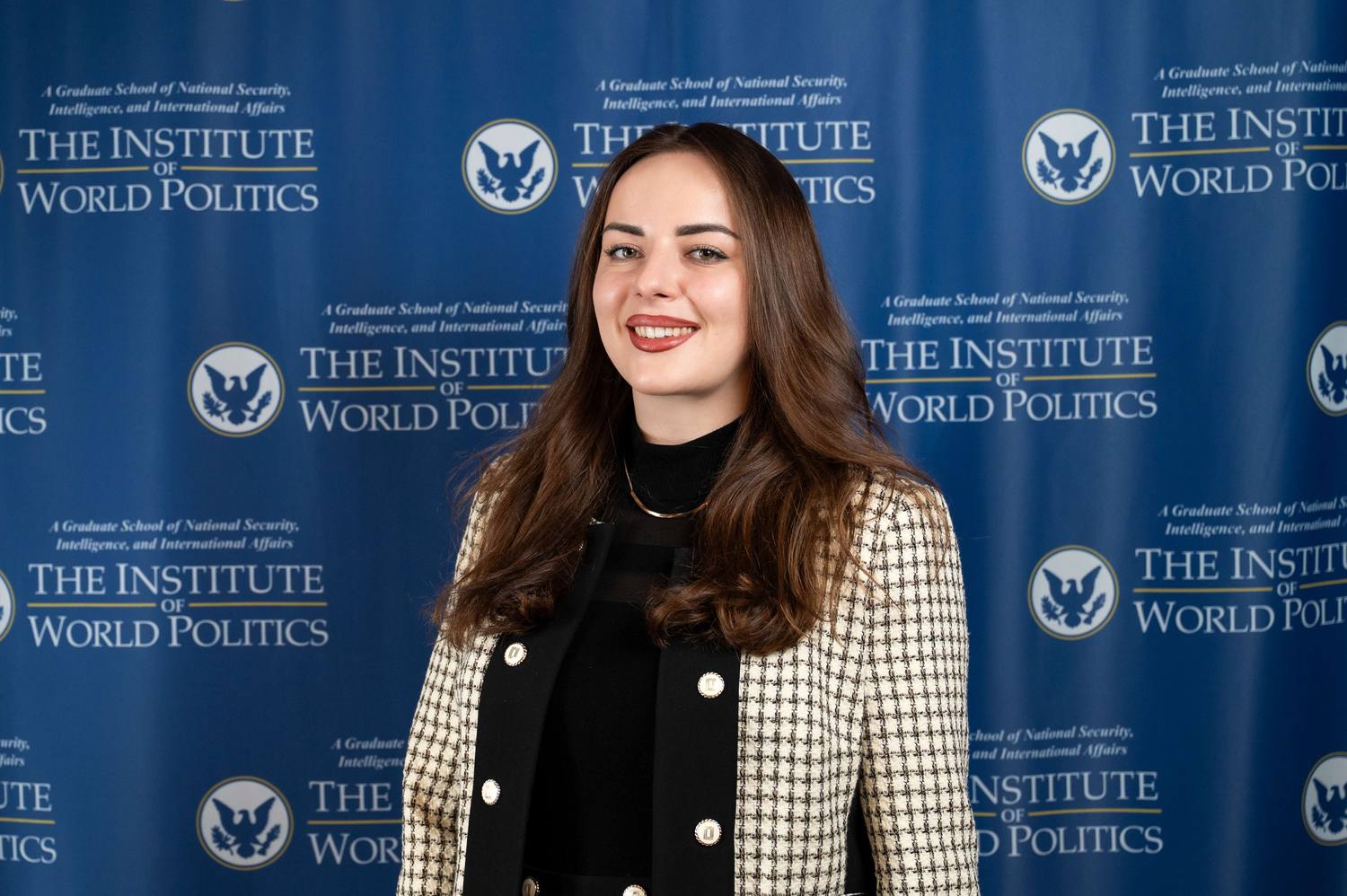
Inna Osetrova didn't come to Washington, D.C. simply to build her résumé.
She came because of the questions she cared most about, how emerging technologies are reshaping governance, security and human behavior, which demanded a more immersive environment than the classroom alone could provide.
During her semester at TWC's Academic Internship Program in 2024, she found the conversations, networks and real-world exposure that clarified her direction. What began as a semester in Washington became the foundation for her next chapter: a master's degree in Statecraft and International Affairs at the Institute of World Politics.
What concerns did you have going in?
Relocating to D.C. as an international student came with real uncertainty. However, what moved me forward was recognizing that the cost of not going felt higher than the cost of going.
What specific experience challenged or shaped you most?
Washington is relentlessly shaped by the people around you. Who you spend time with, who challenges your thinking and who pushes you to show up differently determines your experience more than any internship title or résumé line. The peers I found through TWC became a genuine intellectual community. Our conversations would easily turn into debates, and those informal exchanges sharpened my thinking in ways that formal coursework alone couldn't. That understanding has stayed with me and shaped how I approach mentorship, collaboration and the communities I choose to build within.
The cybersecurity policy class expanded my analytical frame well beyond technical systems and into the governance questions underneath them, how the U.S. develops tech policy, how those frameworks ripple outward to shape global norms and how exposure to the digital world accelerates transformations that societies often aren't prepared for. It helped me see that the intersection of emerging technology, international security and human adaptation has become one of the defining policy challenges of our time. TWC gave me the institutional context to start working at this intersection seriously.

How did TWC bridge the gap to where you are now?
The most important thing TWC taught me is that careers are built on relationships, not as a cynical observation, but as a genuine truth about how ideas move, how doors open and how trust gets built across institutions. TWC put my foot in the door. It got me to Washington, gave me institutional footing and introduced me to the community that led me to the Institute of World Politics. That chain of events doesn't happen without TWC being the first link.
If you received a scholarship, how did it make this opportunity possible?
Receiving a merit scholarship was meaningful beyond the financial relief; it was a signal of validation at a moment when I was still building confidence in my place in this field. It made the decision easier, and it made me arrive with more intention.
What advice would you give to someone on the fence?
Just do it. There is no version of this decision you will regret. The city, the people, the opportunities, none of it comes to you. You must go to it. TWC is how you go.
About the Author
Follow on Twitter Visit Website More Content by The Washington Center


