


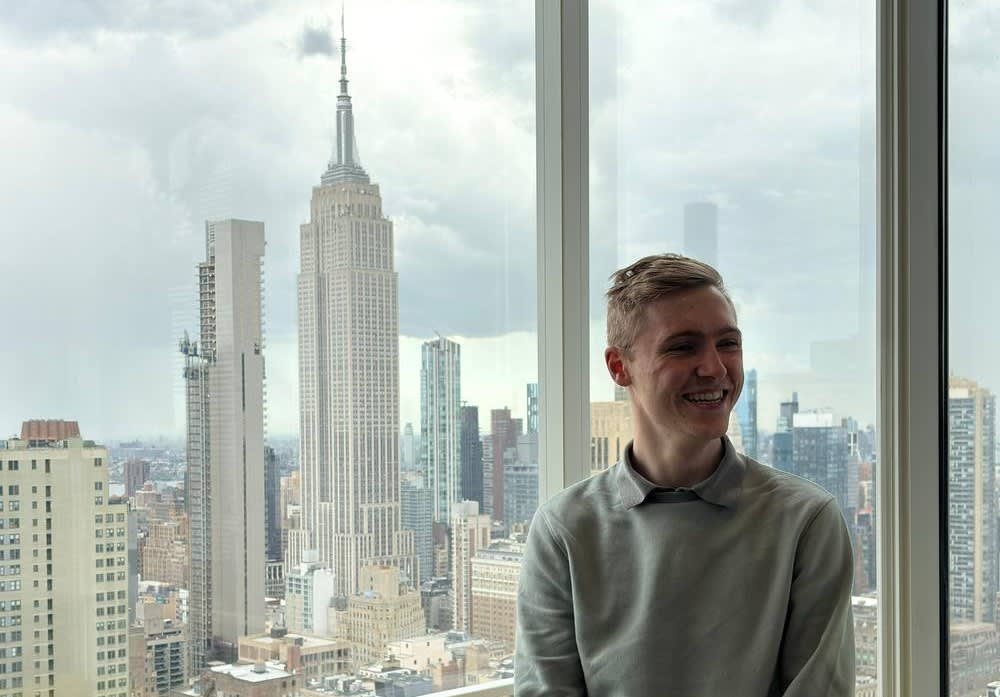
When Vic Winderix arrived in Washington, D.C. for his final semester abroad, he had a computer science degree nearly in hand and almost no experience with artificial intelligence. By the time he left, he had helped build a proof-of-concept AI tool for the Gates Foundation, one designed to protect the integrity of research that shapes decisions for millions of people around the world.
A senior in the Computer Science program at Thomas More University of Applied Sciences in Belgium, Vic interned at Development Monitors, a boutique consulting firm with outsized reach. We sat down with him to talk about the project, the learning curve and what it means to go from studying IT in a Belgian classroom to contributing to global research infrastructure from a desk in D.C.
Tell us about your internship at Development Monitors.
I interned at Development Monitors LLC, a small consulting firm that works with major organizations like the World Bank and the Gates Foundation. My main project was building an AI-powered proof of concept tool for the Gates Foundation's Design, Analyze, Communicate (DAC) program, which is designed to prevent research waste. The tool automatically scans research outputs to identify questionable research practices across different fields of study.
What made this project stand out was the scale of its potential impact. I came in with almost no prior experience in AI, and within one semester I was contributing to a tool that directly supports the integrity of global research, research that influences decisions affecting millions of people. That shift in perspective, from studying IT in a classroom to seeing how technology operates at that level, was something I didn't expect and won't forget.
Tell us about why you chose the Academic Internship Program?
My home institution recommended The Washington Center (TWC), and the structure of the Academic Internship Program made it a strong fit. It combines an internship placement, career readiness programming and an evening course, together enough to satisfy my graduation credits. TWC also had a cybersecurity-focused program, which aligned with my background and gave me confidence I'd find a relevant internship. The opportunity to spend a semester in Washington, D.C., one of the most significant cities in the world for these fields, made the decision easy.
What are some of the specific skills and networking opportunities you've gained, and what challenges did you face?
Professionally, I came away with hands-on experience in AI development that I had no background in before this semester. I also completed a full Project Management course where my team took a fictional project from initiation to closure, budgeting, timelines, risk management, skills I can apply directly in my career.
On the networking side, the informational interview tasks within TWC's career readiness program pushed me to reach out and build professional contacts I wouldn't have sought out independently. That said, I didn't fully leverage the Virginia Tech network that was accessible through my internship, and that's something I'd approach differently.
The main challenge was finding my footing early in the internship. I was working alongside a co-intern who had significantly more AI experience than I did and figuring out where and how to contribute meaningfully took time. It pushed me to be more intentional, to focus on my own progress rather than comparing myself to someone who had months of experience before the semester even started. By the end, I had contributed to a tool presented to the Gates Foundation. That's the benchmark that matters.
What were you concerned about when applying, and how did you overcome those concerns?
My biggest concern was finding an internship. As an international student, many internships required security clearance or U.S. citizenship, which immediately ruled out a significant portion of the available opportunities. I was worried I wouldn't land something relevant to my field.
What helped was the support from my Program Advisor, who guided me through the process and helped me build a stronger resume and cover letter. I ended up interning somewhere I hadn't expected, but I made a deliberate choice to engage fully and extract as much value as possible from it.
Financially, I was fortunate to receive a scholarship, which took a lot of pressure off. I was also in a comfortable enough position at home that budgeting wasn't a constant stress. For students who are in a different situation, I'd say the resources exist; both TWC and my home institution offered multiple avenues for financial support. The barrier is often not knowing those options are there.
What was your most exciting experience at TWC?
It wasn't any single event or landmark; it was the people. TWC's housing setup and the social events they organized early in the semester gave me the chance to meet people I genuinely connected with. That friend group became the foundation of the entire experience.
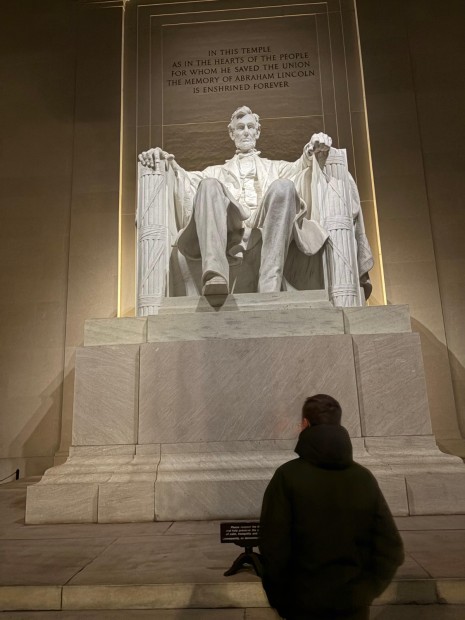
D.C. has a lot to offer, museums, monuments, great spots to eat and drink, and events like the cherry blossom festival that bring real energy to the city. But none of those experiences would have been what they were without the right people to share them with. Seeing the Lincoln Memorial lit up at night for the first time is something that genuinely moves you. But what I'll actually remember is who was standing next to me.
Tell us about the trip to NYC.
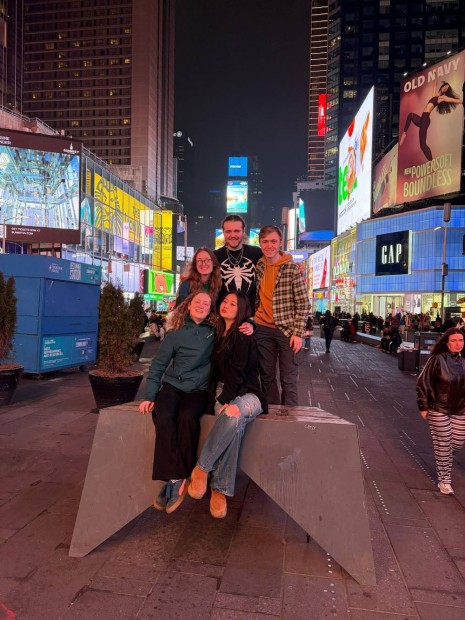
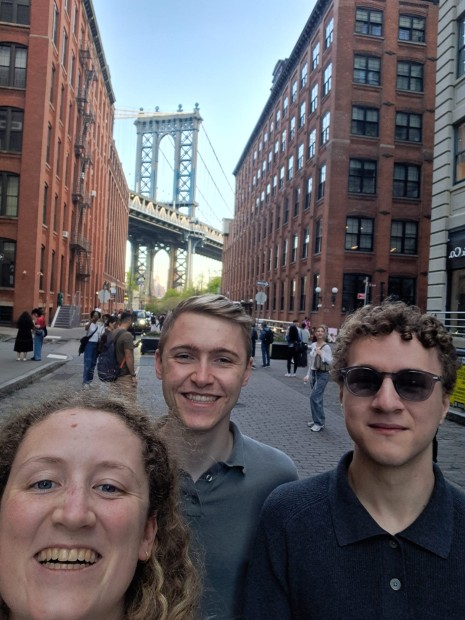
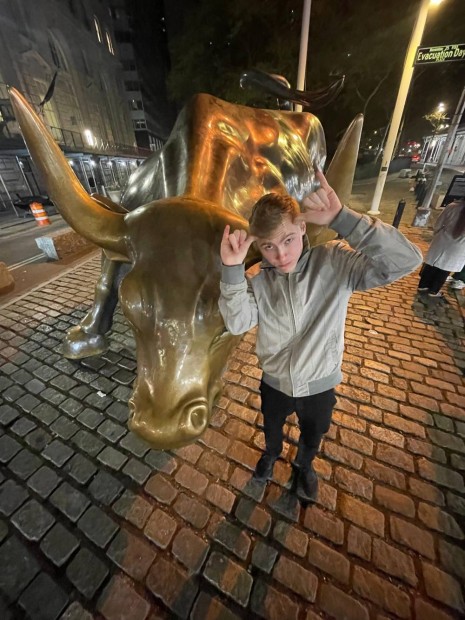
TWC organized a trip to New York City for all Belgian students in the program. The centerpiece was a visit to the Delegation of Flanders , where we learned how Flanders maintains network and connection points to promote Belgian culture and economic interests in host countries like the United States, South Africa, Switzerland and other European nations. We also had the chance to share our own experiences, our internships, the culture shocks and what surprised us.
D.C. is a great city and had been home for the semester, but New York added a completely different dimension. Getting to experience two of the most iconic American cities in the same semester gave me a much broader picture of what the U.S. is.
How has TWC helped clarify your goals and priorities?
Several things became much clearer by the end of this semester.
Professionally, I know the kind of environment where I do my best work: structured, knowledge-sharing, with room for deep focus. A medium to large company in security or IT infrastructure, where I have autonomy but also access to guidance, is where I'll thrive. I also know I'm not ready for a senior independent role yet, and I'm comfortable saying that, it gives me a clear direction rather than false confidence.
This semester confirmed that I'm more capable of independence than I had given myself credit for. Living alone in a new country, managing my own schedule, building a life from scratch, I discovered I handle that well. At the same time, I learned that isolation isn't something I can sustain. Daily connection with people is not optional for me; it's what keeps me motivated and functional.
The combination of those two things, knowing how I work best professionally and what I need personally, is probably the most valuable thing I'm taking home.
Anything else you'd like to share?
If there's one thing I'd want future students to hear, it's this: the uncertainty you feel before going is not a reason to hesitate. It's a sign you're about to do something worth doing. Go with an open mind, use every resource the program offers, and invest in the people around you from day one. The version of yourself that comes back will be more capable, more self-aware and clearer on what you actually want. That's worth more than a perfectly planned semester.
About the Author
Follow on Twitter Visit Website More Content by The Washington Center


