


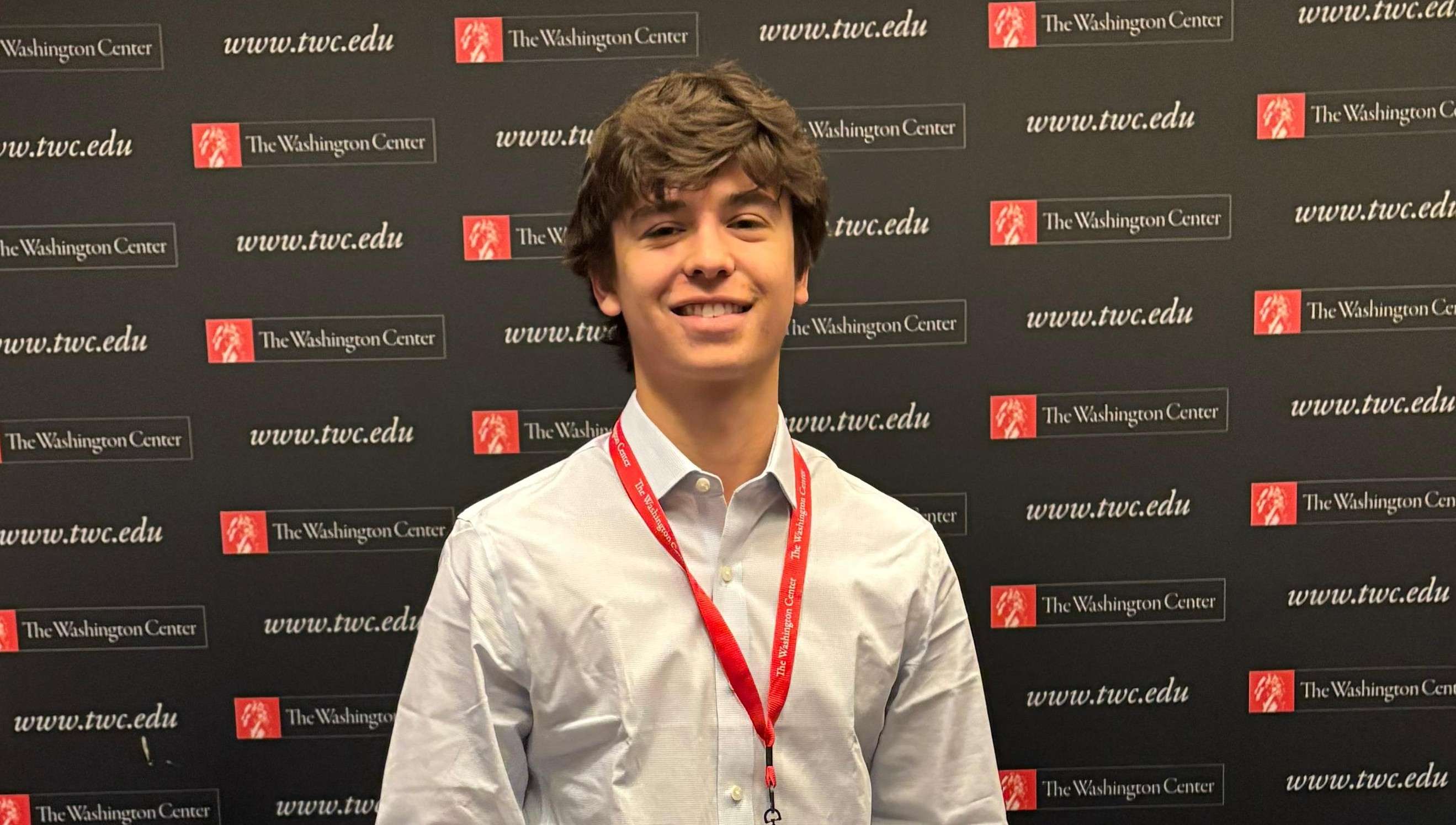
Why would a finance major spend a week studying national security? For Luka Szymanski, the reason was simple: geopolitics, trade policy, AI regulation and national security shape markets long before those forces show up in a stock price. With a private banking internship at Santander in Miami, FL approaching, Luka attended The Washington Center's National Security Seminar to understand the broader environment that drives investment decisions, and to develop professionally in the city where many of those decisions are made.
Why would a finance major attend a national security seminar?
As someone studying finance, I think it's becoming impossible to separate markets from what's happening globally. Whether it's trade policy, geopolitical tensions, AI regulation or energy security, these are all factors that directly influence investment decisions and the economy. I wanted to learn beyond the classroom and understand how these decisions are actually made. Being in Washington, D.C., surrounded by policymakers, think tanks and professionals working on these issues every day, gave me a perspective that's difficult to get anywhere else. With my internship at Santander beginning shortly afterward, I knew this experience would also help me better understand the macroeconomic and geopolitical forces that wealth managers and investors constantly monitor.
Do you need a political science background to study national security?
The biggest surprise was how interdisciplinary national security really is. I expected it to be a field mostly for political science or international relations students, but I quickly realized how valuable backgrounds in finance, economics, communications and data analysis can be. That made the experience especially relevant for me, because it showed how financial professionals also need to understand the broader world they're investing in. The discussions around AI also stood out. Rather than focusing on replacing people, the conversation centered on learning how to leverage AI as a tool to make better decisions. That's a mindset I'll definitely carry into my career.
What career lessons does a national security seminar teach?
One of the biggest takeaways was realizing how important it is to intentionally build your career. Once you understand where you want to go, it's much easier to identify the experiences and skills that will help you get there. For me, the seminar reinforced that succeeding in finance isn't just about understanding balance sheets or markets. It's about understanding the political, economic and global environment that shapes those markets.
Why study national security in Washington, D.C.?
In Washington, D.C. you’re surrounded by institutions where major decisions are being made every day, and many of the speakers weren't simply teaching theory, they were actively working on the issues we discussed. That made every conversation feel current and practical. Outside the classroom, being in D.C. also helped me grow professionally. It pushed me to practice networking, meet students from completely different backgrounds and become more comfortable building relationships in professional environments. There are also lots of fun things to do in the city, and I’m lucky I got to DJ in a couple of great spots where I was able to invite my peers.
Are there scholarships for TWC seminars?
Cost was definitely something I considered. Thankfully, I received a scholarship, which made attending possible, and I'm very grateful for that opportunity. I'd encourage anyone who's interested not to let finances stop them from applying, because there are resources available.
Who should attend TWC's National Security Seminar?
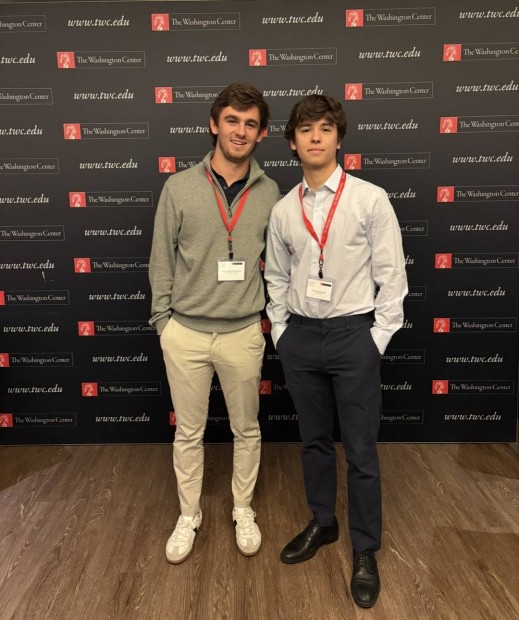
I'd recommend it to any student, regardless of major. One of the best parts of the program was meeting people from completely different academic and professional backgrounds who were all motivated to learn and challenge themselves. Those conversations expanded my perspective just as much as the seminar itself. Whether you're interested in finance, business, technology or you're simply trying to figure out your next step, the program gives you a much broader understanding of how the world works and how different industries connect. I left with new knowledge, stronger professional relationships and a better understanding of how I want to continue building my career.
Frequently Asked Questions About The Washington Center's Short-Term Programs
Is a one-week program in Washington, D.C. worth it?
For many students, yes. A one-week program can offer an intensive introduction to Washington, D.C., giving students the opportunity to step outside the classroom, engage with professionals and explore fields they may be considering for their future.
Programs such as Inside Washington and the Cybersecurity Accelerator combine discussions, professional development, networking, and visits to organizations with conversations with people working in government, technology, national security, business and other fields. Rather than simply learning about these subjects academically, students get to see how professionals approach them in the real world.
The shorter format can also make a D.C. experience possible for students who cannot commit to a full semester away from campus. In just one week, students can experience the city, learn about potential career paths, meet professionals and determine whether they want to pursue a longer internship or another opportunity in Washington.
What can I gain from a one-week Washington, D.C. program?
The biggest benefit may be different for every student. You might make a professional connection, discover a career you had never considered, gain a better understanding of an issue you have studied in class, or simply come away with a clearer idea of what you want to explore next.
Short-term programs can expose students to current issues and professional environments while helping them develop practical skills such as asking questions, communicating with professionals, participating in discussions, and building relationships.
You may also leave with a better sense of which organizations, industries, or career paths interest you. Just as importantly, you may discover that something you thought you wanted to pursue is not the right fit. Both kinds of discovery can help shape your next step.
Do I need to know what career I want before attending a Washington, D.C. program?
Not at all. In fact, one of the advantages of a short-term program is that you can use the experience to explore possibilities before making a major commitment.
Washington brings together professionals from government, technology, national security, nonprofits, advocacy organizations, business, policy, and many other fields. Hearing how people built their careers and asking them about their work can give you perspectives that are difficult to get from a classroom alone.
You do not need to arrive in Washington with a career plan. Come with questions. What does a career in national security actually look like? What does someone working in public policy do every day? How do people move from college into government or the private sector? Conversations like these can help you start connecting your academic interests with potential career paths.
How can I make the most of a one-week program or seminar?
Because the experience is short, preparation can make a big difference. Before you arrive, look at the organizations, speakers, and topics included in your program. Identify a few subjects you genuinely want to understand better and come prepared with questions.
During the program, take advantage of opportunities to speak with professionals rather than simply listening to presentations. A thoughtful question can lead to a longer conversation, a new perspective, or a professional connection.
And don't let the networking end when the program does. Follow up with people you met, thank them for their time and stay connected when appropriate.
Is a short-term D.C. program useful if I am still exploring my major or career?
Yes. Both programs and seminars can be particularly useful for students who are still figuring out how their academic interests translate into careers.
For example, a student interested in technology may discover an unexpected connection to cybersecurity or national security. Someone studying political science might become interested in advocacy, government relations, or policy research. The opportunity to hear directly from professionals can help students see possibilities they may not have considered before.
The goal is not necessarily to leave Washington with a career decision. Sometimes the most valuable outcome is leaving with better questions and a clearer idea of what you want to investigate next.
Want to see the world the way policymakers and investors do? Explore The Washington Center's Upcoming Short-Term Experiences in D.C. and read what other participants are saying:
About the Author
Follow on Twitter Visit Website More Content by The Washington Center


