


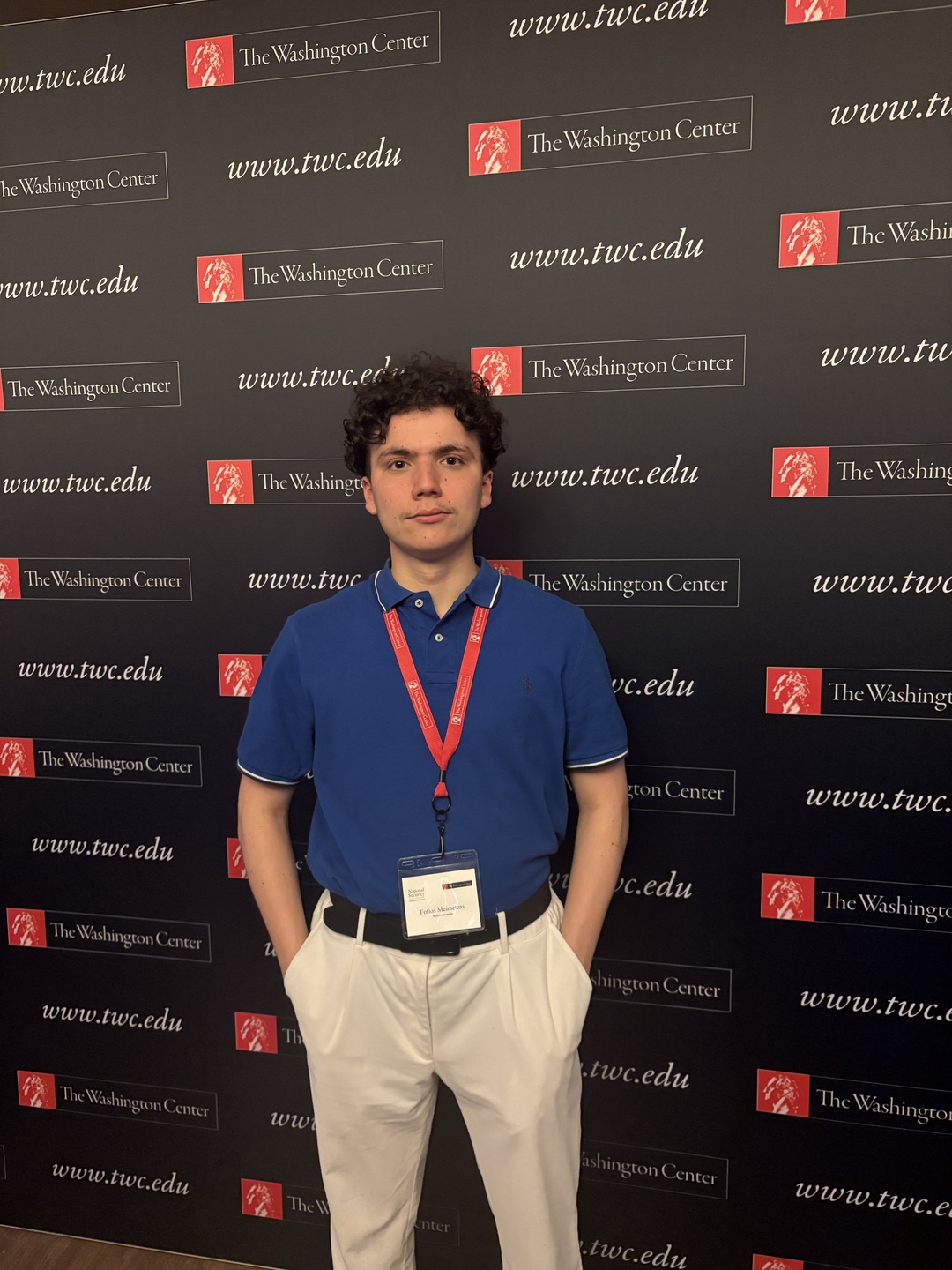
Many students wonder whether spending one week in Washington, D.C. can really make a difference. For first-generation Suffolk University student Fotios Meimeteas, it did.
During The Washington Center's National Security Seminar, one networking conversation led to a personal referral in immigration law, the career he plans to pursue. His story shows how stepping outside your comfort zone and saying yes to opportunity can open doors that a résumé alone often cannot.
Is a one-week Washington, D.C. seminar worth it?
I had never been to Washington, D.C., and the chance to travel there for professional experience felt like a decision I could not pass up.
When I got accepted to TWC’s National Security Seminar, I stopped my mom before her midnight shift to tell her the good news. She looked back at me and froze, tears in her eyes. I began to tear up too as I told her I would be spending a full week in Washington, D.C., for an academic seminar filled with the kind of opportunities I had been looking for, the kind my family does not have access to back home in Brazil.
As first-generation students, we carry the risks our parents took. To me, this opportunity honored my mom’s sacrifices. So, yes, it is.
Can networking actually help you get an internship?
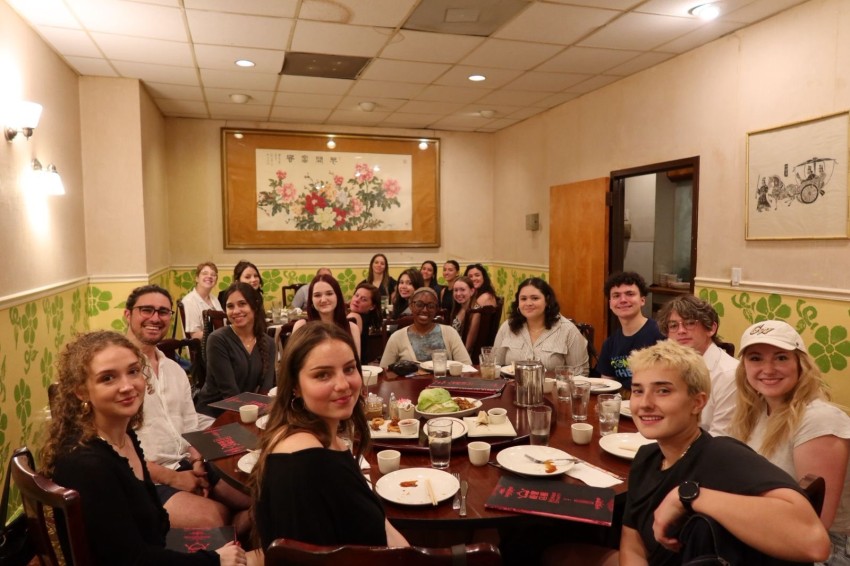
Absolutely Yes, I had a lightbulb moment at a networking event, and I went in expecting to simply shake hands and exchange business cards, but it turned out to be much more. I asked one alum about his journey to becoming a lawyer, and whether he knew any immigration lawyers, since that is my dream profession. With excitement in his voice he said, “I certainly do know a few immigration lawyers,” and right there he handed me his business card along with a napkin where he had written the information of a colleague I should connect with. Someone in a field I admired saw my ambition and believed in it.
From that moment, I realized connections are not made simply by saying “hi.” They are formed by exchanging ideas, asking questions and sharing stories.
What is the National Security Seminar really like?
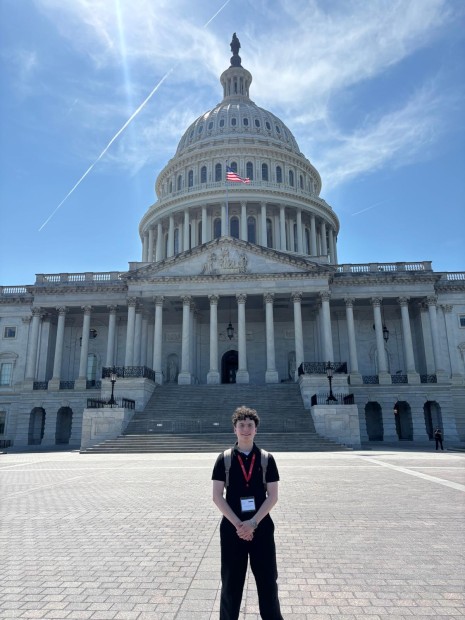
Well for me, in just a week I got to explore much of Washington, D.C. What I enjoyed most were the Capitol Hill site visits, and everything in between, from our neighborhood to the Senate. Seeing everything with my own eyes in person was mind-blowing. I also made so many connections, and a highlight was one of the panel discussions on A.I. Personally, I do not support the use of A.I. and I have worries about its role in the future, but I agreed with many of the ideas raised in conversations with key experts in this field.
What skills do students gain during the National Security Seminar?
I came to TWC without much in-depth knowledge of national security or A.I. The program let me explore different policy areas and build connections with nonpartisan think tanks, lawyers and experts who showed me why building a network matters.
Should I apply if I'm nervous about the cost?
Absolutely yes. I was definitely concerned about the financial burden, as a low-income student, I had to seriously question whether I could participate.
There were nights I felt I should not go, convinced that a financial barrier was blocking me from what I had worked so hard for. I kept asking myself, how am I going to afford a program like this? But I pushed through, and this is my message to low-income, first-generation students: you are not alone. Do not let barriers stop you from achieving your goals. Instead, let them empower you. Confront your obstacles and fears by finding the solutions that move you forward.
If you are on the fence about applying, I say: just do it. Take the risk, like you would for anything that inspires you. You never know where the people you meet can lead you. A loved one once told me that if you know how to cast the reel, you can catch many fish, meaning if you know your own skills and potential, you can transfer your strengths to catch many opportunities. Each time you take a risk, it becomes your own milestone.
One week changed more than Fotios expected. He left Washington with new professional relationships, a deeper understanding of public policy and a personal referral in immigration law that moved him one step closer to his career goals.
Frequently Asked Questions
Is a one-week program in Washington, D.C. worth it?
For many students, yes. A one-week program can provide a concentrated introduction to Washington, D.C., and help students gain professional experience, make connections, and explore career interests without committing to a full semester away from campus.
Short-term programs through The Washington Center can include policy discussions, professional development, networking opportunities, employer or organization visits and conversations with professionals working in government, nonprofits, advocacy, business and other fields. These experiences can help students understand how the issues they study in the classroom are addressed in the professional world.
A one-week program can be particularly valuable for students who are unsure whether they want to pursue a longer internship in Washington, D.C. It allows them to experience the city and its professional environment, meet people working in fields they are considering, and begin building a network.
The value of a short-term program is not measured only by how long it lasts. For some students, one conversation with a professional, one new connection, or one experience that changes their understanding of a career can influence what they choose to pursue after college.
Can networking during a short-term program really lead to job opportunities?
Yes. Networking can lead to professional opportunities, referrals, informational interviews, mentorship and connections that students may not otherwise have access to. While networking does not guarantee a job, a thoughtful conversation can become the beginning of a valuable professional relationship.
Fotios is one example. During a networking event at The Washington Center, he asked thoughtful questions and engaged with professionals in attendance. One of those conversations resulted in a personal referral to an immigration lawyer, giving him a direct connection to someone working in a field related to his interests.
The lesson is that effective networking is not simply about collecting business cards or adding people on LinkedIn. Students can make stronger connections by asking specific questions, showing genuine interest in someone's work, explaining their own interests, and following up after the conversation.
For college students, these interactions can be especially valuable because they provide access to professionals who can offer perspectives on careers, industries, graduate school, internships, and the transition from college to the workforce.
Is The Washington Center a good option for first-generation college students?
The Washington Center can be a valuable experience for first-generation college students because it provides opportunities to build professional networks and gain career experiences that may be less accessible without an established professional network.
First-generation students may be navigating professional environments for the first time, including learning how to network, communicate with employers, find mentors, and understand what employers expect from college graduates. A structured program can provide opportunities to practice these skills while surrounded by other students and professionals.
Short-term programs can also help students develop a clearer understanding of career possibilities. Meeting professionals, visiting organizations, participating in discussions, and experiencing Washington's professional environment can make potential career paths feel more tangible.
Most importantly, students do not need to arrive in Washington already knowing how to network or navigate a professional environment. These are skills that can be learned through experience, preparation and guidance.
Can low-income students afford a program in Washington, D.C.?
Some students use scholarships, university funding, financial assistance, or other sources of support to help make participation possible. The availability and eligibility requirements for financial assistance vary, so students should research their options early and speak with their college or university about potential funding.
Students should also consider the total cost of a Washington, D.C. program, including program fees, transportation, meals, and personal expenses, and create a budget before participating.
Financial circumstances should not automatically prevent a student from exploring a short-term program. Students who are concerned about cost can ask about available scholarships or funding opportunities and investigate whether their college, academic department, student organization or other funding source can help support the experience.
For students who may not have family members or personal networks familiar with these opportunities, asking questions early can be especially important. Financial support is often something students need to actively research and apply for rather than something that happens automatically.
What can I gain from a one-week Washington, D.C. program?
A one-week program can help students gain professional connections, exposure to potential careers, a better understanding of public policy and current issues, and practical experience communicating with professionals.
Students may also leave with a clearer sense of what they want to pursue, what questions they should be asking about their career, and which organizations or industries they want to learn more about.
For some students, the biggest benefit may be a new professional connection. For others, it may be discovering a career they had never considered or realizing that a particular field is not the right fit. Both outcomes can be valuable because career exploration is part of the college experience.
Is a short-term program useful if I cannot do a full semester internship?
Yes. A short-term program can be an alternative for students whose academic, financial, work, athletic or personal commitments make a full-semester internship difficult.
Although a one-week program cannot provide the same depth of experience as a semester-long internship, it can still offer professional exposure, networking, career exploration, and a first introduction to working and learning in Washington, D.C.
Interested in experiencing Washington, D.C. and connecting with professionals beyond the classroom? Explore The Washington Center's upcoming seminars, read more student and participant spotlights, and discover how real-world experiences in Washington can help students explore careers, build professional networks, and prepare for life after college.
About the Author
Follow on Twitter Visit Website More Content by The Washington Center


