


If you’re a university student studying cybersecurity, you already know the anxiety. The field is evolving faster than any curriculum can keep pace with. AI is reshaping the threat landscape. The career paths are many, the entry points feel unclear and the gap between what you learn in class and what employers actually want can feel enormous.
The Washington Center’s Cybersecurity Accelerator Program was built specifically for students like you. And based on what participants experienced in the most recent cohort, it delivers that promise in ways that go well beyond a typical academic seminar.
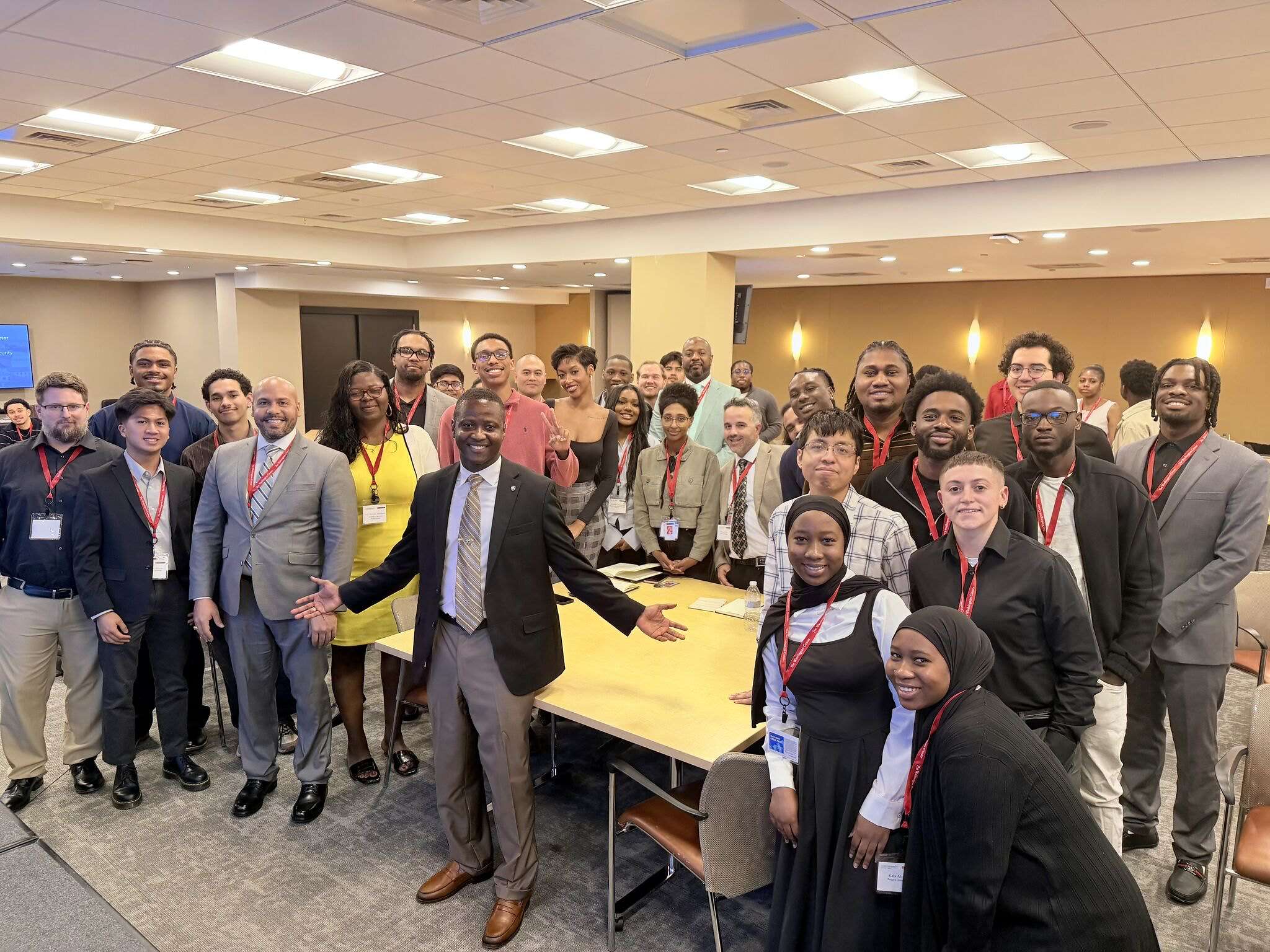
This is the story of what happened when a group of driven, curious and forward-thinking students spent a weekend in Washington, D.C. and left with something no syllabus could give them: clarity, confidence and a professional network that will follow them into their careers.
What is the Cybersecurity Accelerator Program?
The program isn’t a lecture series. It’s an accelerator, a concentrated environment designed to fast-track students’ understanding of the field, sharpen their career vision and introduce them to the kind of professional community that takes years to build on your own.
Participants attend speaker sessions, visit top organizations, engage in hands-on labs and share residential space with fellow students who are equally serious about their futures in cyber.
Real Students. Real Takeaways.
The most recent cohort brought together students from Bridgewater State University, Miami Dade College, Mount St. Mary’s University, Western Governors University, New York University and beyond. Their backgrounds varied; some came with deep technical foundations, while others were navigating a career pivot, but they all left with one thing in common: momentum.
In a sense, participating in the program demystified cybersecurity for me. It allowed me to go beyond my WGU courses.”
Chris Maurera
Western Governors University

Chris Maurera joined the Cybersecurity Accelerator Program without a traditional IT background. He started his cyber journey by going back to school 100% online through WGU and was candid about the uncertainty that comes with entering a technical field from a non-traditional path.
“Although I like technology, I do not have an IT background as far as previous education and work experience goes,” he said. “I believe it’s critical for my future success to have participated in a program that exposed me to cyber professionals from different backgrounds. Hearing from the speakers provided insight into different pathways into cyber.”
Now, Chris is taking the word “accelerator” literally, finishing his degree, pursuing local internships and intentionally balancing cyber policy and technical skill-building in his free time.
I walked away with a stronger understanding of the many career paths within cybersecurity and a sharper sense of the skills and tools I want to build.”
Eni Ogunbayo
Bridgewater State University
Eni Ogunbayo, a cybersecurity and digital forensics student at Bridgewater State University, discovered the program through a classmate who had previously attended. What she didn’t anticipate was clarity. Sessions emphasizing hands-on labs and technical projects reinforced something she already believed: that practical experience isn’t just valuable in cybersecurity; it’s essential.
Speakers like Dr. Fatou Sankare made a lasting impression, offering candid, technical insight and honest career advice that bridges the classroom and the field. Eni describes the experience as a chance to step outside your comfort zone and engage with accomplished professionals who are genuinely invested in student growth.
The Professionals Who Show Up
One of the most consistent themes across participant reflections was the quality and openness of the speakers. These weren’t polished keynote presentations delivered from a distance. They were honest, candid conversations from people at the top of the field who took time to engage with students as future colleagues.
Brenda Suarez, a WGU student whose program experience reinforced her goal of pursuing a career in cybersecurity, was particularly moved by speakers like Col. Candice Frost. “One of the things I appreciated most was how open the speakers were about their experiences,” she said. “Hearing honest perspectives about the industry, from leadership to emerging cyber threats made the program both motivating and realistic.”
Francesca Cao, a business and technology management student at New York University, echoed that sentiment. Hearing from both Candice Frost and Mike Veneri on cybersecurity leadership and the trajectory of the field, particularly around post-quantum cryptography, was one of the standout moments of her weekend. “It’s a topic I’d been reading about but hearing them bring it up and mention real-world applications made it feel a lot more concrete and relevant,” she said.
Harold Alexander Silva, a Miami Dade College student and Dr. Nancy Cade Scholarship recipient, captured the program’s deeper thesis: “While my primary passion lies in cyber policy, this weekend reinforced a vital lesson: having a strong foundation in technical skills is absolutely essential to being an effective policymaker.”
Bridging the gap between technical operations and strategic policy is the future of the field.”
Harold Alexander Silva
Miami Dade College
The program doesn’t just bring the industry to students; it takes students into the industry. This cohort visited the Amazon Web Services (AWS) Skills Center, where participants got a closer look at cloud technology and its role in today’s cybersecurity landscape. Daniel Figueroa, a cybersecurity student at Mount St. Mary’s University, called it an unexpected highlight.
“It was inspiring to see how these professionals work to protect organizations and individuals from cyber threats,” Daniel said. A standout moment for him was a direct conversation with Bradley Nix, who shared insights on building skills, gaining experience, and exploring roles that align with individual strengths and interests.
Harold’s cohort also visited ICANN, where participants got a firsthand look at multi-stakeholder internet governance, the kind of real-world context that no textbook can replicate.
The Network You Build Here Is Different
Chris reflected on the experience from his flight home. “I leave D.C. with a clarified sense of purpose and an intuition that it won’t be my first and last time here,” he wrote. Francesca highlighted the residential component as a meaningful differentiator: being surrounded by people who are genuinely invested in cybersecurity and AI made for an environment that was “hard not to be inspired by.” Harold gave a direct shoutout to roommates he made during the program, noting that staying at TWC’s housing facility added significant community and value to the experience.
Brenda put it simply: “This program also helps build confidence and stresses the importance of networking.”
Who Should Apply — and What to Know Before You Do
The program attracts students from across the cybersecurity spectrum — those deep in technical study, those focused on policy and governance, and those, like Chris, who are navigating the field from a non-traditional background. What matters most isn’t your résumé. It’s your curiosity and your commitment.
Here are the practical advice participants offered to students considering applying:
- Follow the application instructions carefully and use the resources TWC provides.
- Write your personal statement yourself, without AI. Be genuine. A few of the speakers specifically mentioned this: let your real experience shine, even if it isn’t technical.
- Come in with curiosity and an open mind. Ask questions, connect with speakers, and learn from your peers.
- Don’t assume you’re underqualified or that you don’t belong in the room.
Take that leap of faith. Don’t assume you’re underqualified or that you don’t belong in the room. Come in with curiosity and an open mind, ask questions, connect with speakers, and learn from your peers. Those conversations can be just as valuable as the formal sessions.”
Eni Ogunbayo
Bridgewater State University
Ready to Accelerate Your Career?
The Washington Center's accelerated programs connect students and young professionals with career-defining opportunities in Washington, D.C. – all in one week or less. Through direct access to industry leaders, hands-on professional development and meaningful networking, participants gain clarity about their future and build connections that open doors. See our upcoming programs.
About the Author
Follow on Twitter Visit Website More Content by The Washington Center


