


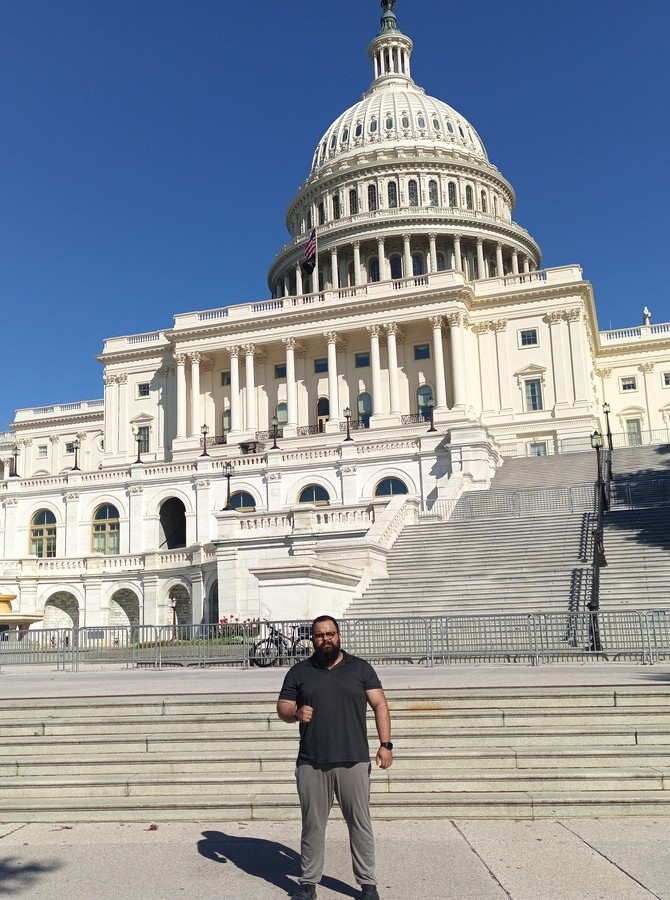
Gabriel Alan Lozano González didn't come to Washington, D.C. looking for an idea. He already had one. What he needed was proof that it was worth the work and a room full of people who could help him figure out how to build it.
When Gabriel arrived at The Washington Center's (TWC) Capitol Immersion Program, he was in the early stages of founding Núcleo de Análisis Estratégicos (NAE), a strategic analysis and government relations platform based in northern Mexico. The concept was specific: rigorous, nonpartisan analysis connecting a rapidly integrating border economy to the policymakers, institutions and private sector actors on both sides of it. Not a think tank for Mexico City. A think tank for the binational frontier — for the businesses, governments, and institutions operating in one of the most economically dynamic and under analyzed regions in North America
He came to D.C. with a project at an early stage and questions that mattered: How do the most effective policy institutions in Washington actually work? What separates the organizations that shape debates from the ones that merely respond to them? Who are the people worth knowing?
One week gave him more answers than he expected.
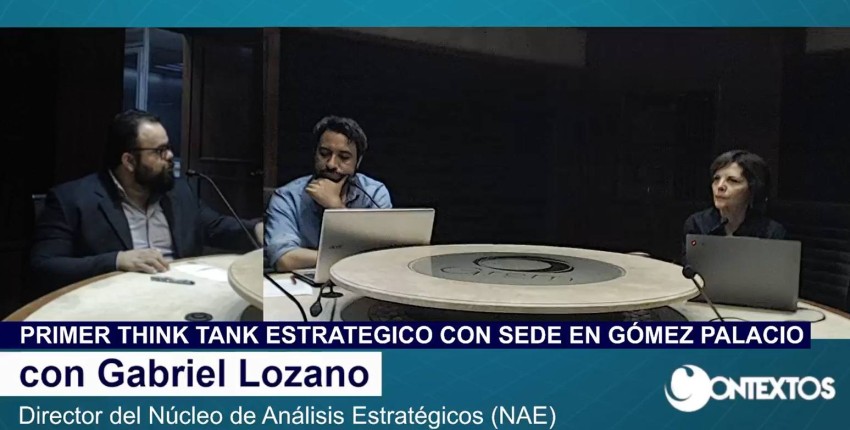
The Moment That Changed the Conversation
TWC's short-term programs are built around access — not just to information, but to the kind of direct, substantive exchange that doesn't happen through applications or LinkedIn messages. For Gabriel, the defining moment came during a session on the role of think tanks in policymaking, when he mentioned in passing that he was building one in northern Mexico.
The conversation accelerated.
Patrick Cole, Managing Director at Lawfare. Charmaine Yoest, Executive Director of the House Values Action Team. TWC President Kim Churches. Each of them engaged — not with polite interest, but with genuine curiosity. Follow-up questions. Real ones.
"The most valuable thing TWC gave me in that moment was not information," Gabriel said. "It was legitimacy — the sense that a project like mine, built at the binational frontier, was worth taking seriously."
In Washington, that kind of signal matters. The city runs on credibility. And credibility, in rooms like that one, is conferred in real time.
What D.C. Actually, Taught Him
Before the program, Gabriel understood Washington the way most people do from the outside: as a system of institutions — Congress, agencies, think tanks, advocacy organizations, each with a defined role and a public face.
The Capitol Immersion Program showed him something less visible and more decisive: the constant, informal exchange between those institutions — the staff who move between them, the relationships that route decisions, the difference between an organization with a presence in D.C. and one with actual standing.
He left with something specific: a higher standard and a clearer sense of the kind of institution he wanted to build. Not a template borrowed from Washington. A set of principles observed in practice — then adapted for a region and a context that Washington rarely thinks about as carefully as it should.
What NAE Is Building
NAE provides strategic political and institutional analysis, regulatory and policy risk assessment, and context-driven intelligence for decision-makers operating in complex environments. Its focus is the border economy — the arc of economic integration, infrastructure investment, and political risk that connects northern Mexico to the United States in ways that federal policy on both sides often misses.
"We analyze politics not as ideology," Gabriel says, "but as structure, incentives and power in motion."
What makes it different from traditional think tanks isn't just geography. It's the combination of long-term structural analysis with real-time institutional insight — designed not just to interpret what's happening, but to support the people who have to operate inside it.
What He Brought Home
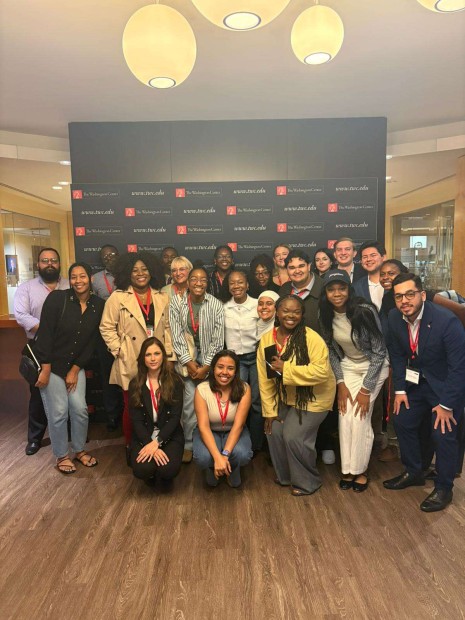
Gabriel returned to northern Mexico with three things his regional peers couldn't replicate: a network that extends beyond his immediate ecosystem, a clearer understanding of how decisions actually get made at the federal level, and the beginning of relationships he intends to build on for the rest of his career.
He also returned with something harder to quantify — the conviction that the project was serious, that the gap he'd identified was real, and that the right people, in the right room, already recognized it.
"The hesitation you feel is probably the most important reason to apply," he says to students considering a program like this. "Come with your questions, your context and your ambition. This experience shows you — more clearly than almost anything else — what becomes possible when you bring them into the right room."
TWC didn't give Gabriel the idea. It gave him confidence that the idea was worth the work.
Ready to find your room?
The Washington Center's accelerated programs connect students and young professionals with career-defining access in Washington, D.C. — in one week or less. Through direct engagement with industry leaders, structured professional development, and meaningful networking with people who are genuinely building things, participants leave with clarity, connections, and a concrete next step.
About the Author
Follow on Twitter Visit Website More Content by The Washington Center


