


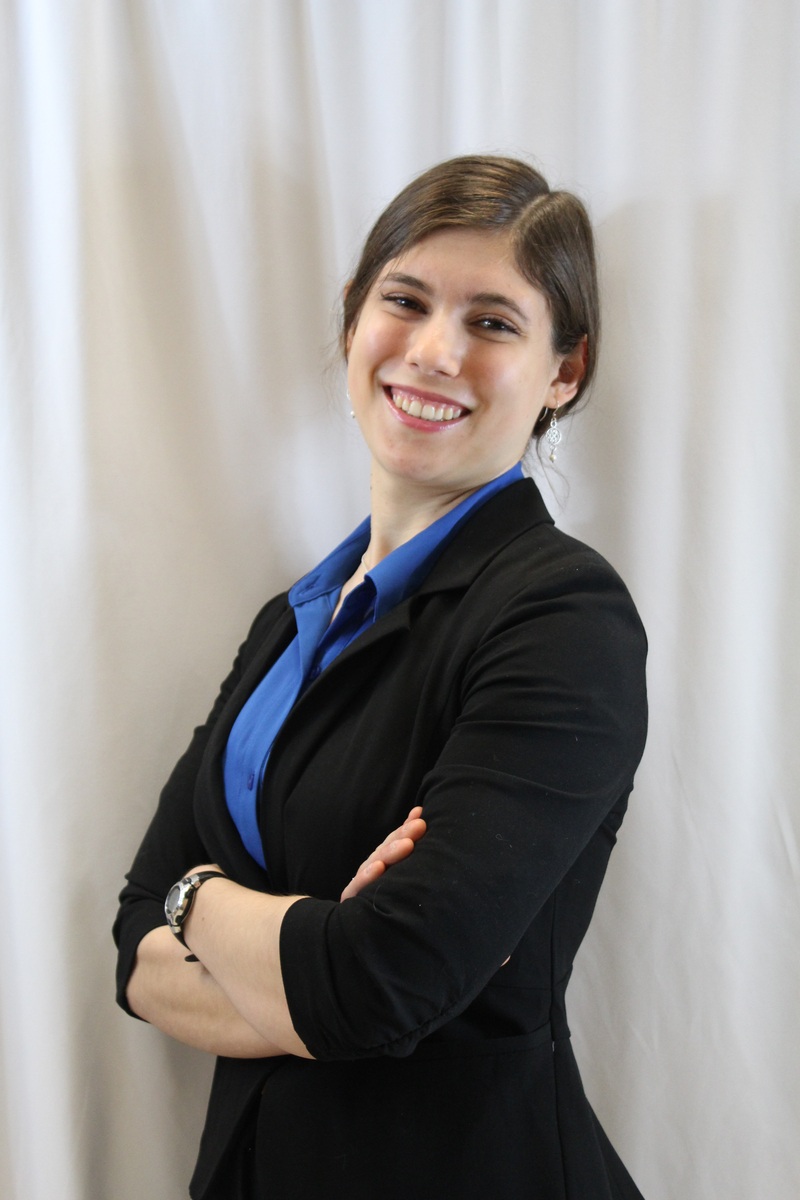
A political science and public service major from the University of Tennessee at Chattanooga, Elyssa Looney spent years on the ground canvassing neighborhoods, working with the Tennessee Election Commission and partnering with nonprofits and local government to push for social change in her home state.
She arrived in Washington already knowing she wanted to bring Tennessee's inequities into the national conversation. What she wasn't sure of yet was exactly how: policy writing, work on the Hill, or law. One semester interning at the Law Offices of Todd S. Baldwin through The Washington Center’s (TWC) Academic Internship Program, working real cases out of D.C. Superior Court, helped answer that question in ways no classroom could.
Tell us about your internship and a project that stood out.
Over the course of the semester, I learned how the courts function, how to relate to clients, how to write sentencing memos and court notes, how to build an accurate defense and how to sift through evidence.
The project that stood out most was a bond review motion I helped write for one of our first clients. He was a very kind person, and I felt a genuine connection with him. We weren't able to get him released, but the documents I wrote contributed to his case, and I felt a real sense of purpose during his sentencing. Knowing that my work mattered to a real person, in a real and consequential moment, that's not something you can replicate in a classroom.
What skills and networking opportunities did you gain and what challenges did you face?
Beyond the legal writing skills, I came away with stronger interpersonal communication, presentation skills and a much clearer understanding of professional norms in a high-stakes environment. Learning how to empathize with clients on a personal level while staying focused and effective was its own kind of education.
The networking opportunities I valued most came through the DACOR Bacon House and the Women's National Democratic Club. Both were directly connected to the policy and advocacy world I want to work in. TWC also hosted events that helped me build contacts.
The biggest challenge was early on: figuring out how to take the evidence Mr. Baldwin gave me and produce the documents he needed for each client. There's no template for that. You have to read carefully, think critically and write with real precision, because the stakes for the person you're writing about are very real. Working through that challenge, and doing it well, was one of the most professionally formative things I've experienced.
What were you concerned about when applying to TWC, and how did you overcome those concerns?
I was a bit nervous about getting in, but the bigger challenge was choosing an internship once I was accepted. I had multiple offers and a short window to decide, and I genuinely worried I had made the wrong choice. In the end, I was very happy with where I landed, but that uncertainty was real at that moment.
The other logistical challenge was timing. Internship deadlines hit while I was carrying a full course load at UTC, which made the process harder than I anticipated. Getting ahead of those deadlines and staying organized was key.
What was your most exciting experience at TWC?
There were a few moments that stood out in very different ways. The one I'll carry longest is the day a document I helped write got a client released from holding and his charges dropped.
On the TWC side, the tour of the Equal Employment Opportunity Commission was genuinely exciting, not just because we got to go off campus, but because the woman leading our tour told me she wanted to interview me for an internship with them the following fall. That kind of spontaneous professional connection is exactly what D.C. makes possible.
I also witnessed a client attempt to escape from the courtroom. Watching the Marshals respond was jarring, a reminder that the environment I was working in was not abstract. That moment stayed with me.
How did your scholarship support this experience?
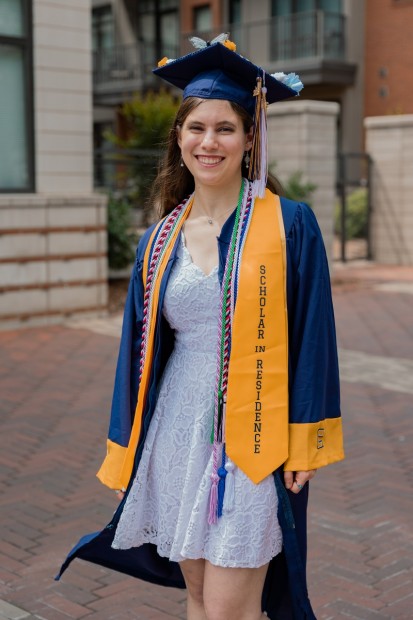
I received a scholarship from Tennessee, and it made this opportunity genuinely possible. Not having to worry about loans or debt meant I could be fully present in the internship, in the program and in the city. That mental space matters more than people realize when you're trying to make the most of an experience like this.
What clarity has this experience given you?
I came in thinking I might want to pursue law alongside policy. I'm leaving with a much clearer sense of where I belong. The courtroom taught me how policy becomes reality for individual people, how the gap between what's written and what's lived can be enormous. That understanding is going to shape everything I do next, whether that's on the Hill or somewhere I haven't found yet.
I also know now that D.C. is where I want to build my career. Coming here was more than just a semester; it was about starting something. Internships deliver the highest career value of any work-based learning experience. Our Academic Internship Program places you at the center of Washington, D.C., in an organization where your work matters, your network is built through direct relationships and your professional direction becomes concrete. Learn more about the Academic Internship Program.
About the Author
Follow on Twitter Visit Website More Content by The Washington Center


