


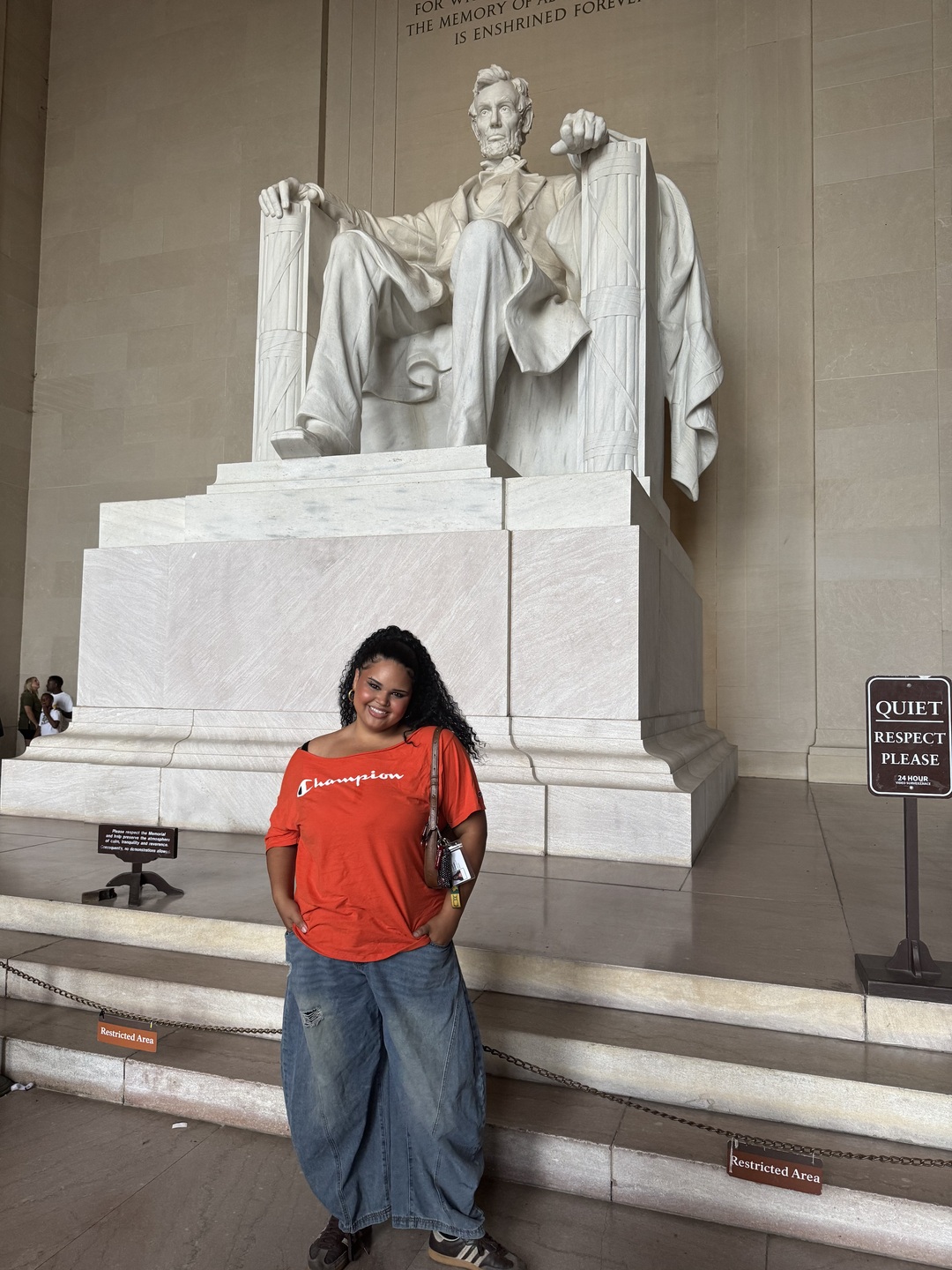
Teanah Webster, a political science major, spent a summer in Washington, D.C. as a marketing intern at Special Olympics District of Columbia through The Washington Center's Academic Internship Program. Highlights include her work designing social and print campaigns and working directly with the CEO.
Why apply to The Washington Center for a D.C. internship?
I applied because I wanted hands-on experience outside the classroom and a way to explore careers in Washington, D.C. I knew I wanted an internship where I could develop professionally, make meaningful connections and see how the concepts I had been studying could be applied in the real world.
What does a marketing intern at a nonprofit do?
At Special Olympics District of Columbia, I built digital and print content that promoted events, raised donations and recruited volunteers.
I interned as a marketing intern with, Special Olympics District of Columbia and every day looked a little different, but most of my time was spent creating digital and print marketing materials using Canva and Photoshop. I designed social media graphics, flyers, donation materials, hiring advertisements and promotional content for Instagram, Facebook, and TikTok to help raise awareness about events and programs.
What was the biggest project you handled as a marketing intern?
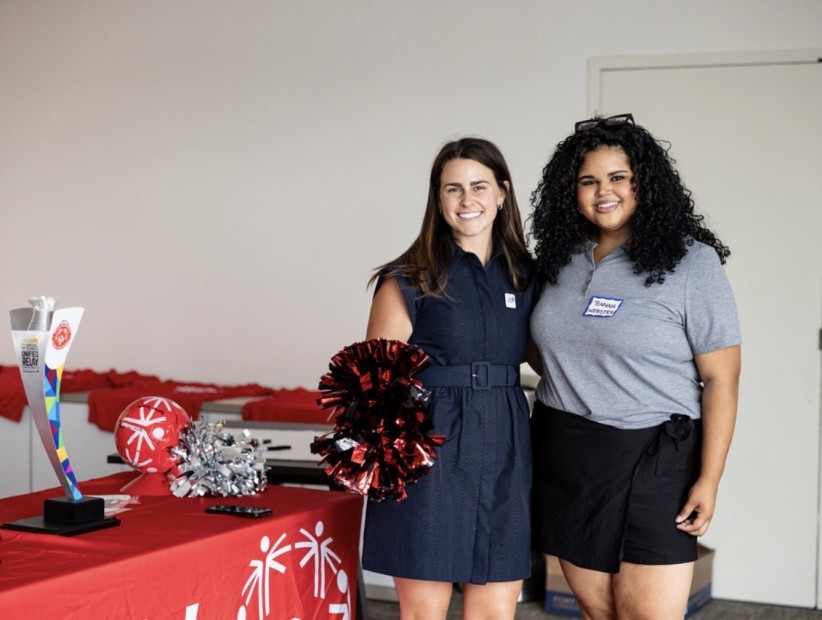
I ran the organization's marketing on my own while much of the staff was away at the 2026 USA Games.
During that time, I managed marketing responsibilities independently, communicated directly with the CEO and kept content and outreach moving forward while balancing my internship and TWC’s career development programming. It taught me how to manage multiple priorities, communicate professionally and become more confident working independently.
What was the most meaningful part of your internship?
Meeting the Special Olympics athletes changed how I saw my work.
The most meaningful part of my internship wasn't just creating graphics. It was getting to meet the Special Olympics athletes. Seeing their confidence, determination and the supportive community around them completely changed how I viewed my work. Every design I created became part of telling their stories and encouraging others to get involved.
What skills in marketing specifically did you build at your internship?
I strengthened my skills in Canva, Photoshop and social media management, along with communication, organization and time management. My internship strengthened both my technical and professional skills. I also had the opportunity to work closely with CEO Nicole Preston and collaborate with dedicated nonprofit professionals who were passionate about creating opportunities for athletes with intellectual disabilities. Their commitment showed me how powerful storytelling and advocacy can be and it changed the way I think about nonprofit work.
How did you handle nerves about moving to D.C.?
I leaned on my coworkers, stayed organized and asked questions until the city and the work felt manageable.
Before coming to Washington, D.C., I was nervous about moving to a new city and balancing a full-time internship with all of TWC’s professional development activities. Once I arrived, I realized that stepping outside my comfort zone was exactly what I needed. I leaned on my coworkers, stayed organized, asked questions when I needed help and gradually became much more confident.
How do scholarships make a semester in D.C. more affordable?
The Samuel G. Rose Scholarship covered my housing and let me focus on the internship instead of the cost.
I was honored to receive the Samuel G. Rose Scholarship. It reduced the financial burden and allowed me to focus on making the most of my internship and professional development opportunities.
What is one D.C. moment you will never forget?
Seeing the giant pandas at the Smithsonian's National Zoo!
Knowing they are among the last pandas currently living in the United States made the experience feel even more special. It was one of those unique Washington, D.C. moments that reminded me to take advantage of everything the city had to offer outside of work.
Is The Washington Center worth it for political science majors?
Yes. It gave me professional skills, a wider network, more confidence and a clearer sense of the career I want to pursue. More importantly, it showed me that meaningful careers exist in nonprofit organizations and that advocacy comes in many forms, including marketing and storytelling. I left the program with valuable experience and lifelong memories.
Interested in exploring a marketing, communications or nonprofit internship in D.C., name brand or not? Check out The Washington Center's Academic Internship Program to see how students connect their academic interests to real world experience.
Frequently Asked Questions about The Washington Center’s Academic Internship Program
Is it better to intern at a well-known organization or a smaller one?
It depends on what you're trying to get out of the experience, and both paths have real tradeoffs worth thinking through.
A recognizable name can open doors later and looks good on a resume, but you often end up with narrower responsibilities and less direct access to leadership. A smaller or lesser-known organization usually can't offer the same brand recognition, but interns tend to get handed more responsibility faster, work closer with senior staff, and walk away with concrete examples of what they actually built or managed.
There's no universally right answer here. It's worth weighing what matters more for your goals right now: the name on your resume, or the hands-on experience and story you'll be able to talk about in interviews.
What are some examples of non-political D.C. internships?
A few worth reading if you're considering this path:
- Sweet Success: How Vy Tran Helped Grow a Local Ice Cream Startup — an inside look at interning with a small, local business rather than a large institution
- D.C. Internships Go Beyond Politics and Government — a broader look at the range of non-political internship paths available in D.C.
- From Classroom to Camera: Eyrinmarie G. Osborne's Journey as a Production Assistant and Storyteller — a creative industry path, far from a traditional political science track
Reading a few of these side by side is a good way to see how differently these experiences can play out depending on the size and type of organization.
Can political science majors intern outside of government in Washington, D.C.?
Yes, absolutely. A political science degree doesn't lock you into government or politics. Research, writing, analysis, communication, and an understanding of institutions and public issues transfer well into nonprofit work, marketing, communications, public relations, and advocacy roles.
Working for a mission driven organization, even a small one most people haven't heard of, can help political science students see how public issues, advocacy and communication actually connect in practice.
Can I get marketing experience even if marketing isn't my major?
Yes. A lot of marketing skills comes from doing the work, not from a specific degree. For a political science major like Teanah, a marketing internship adds a practical layer to an academic background, pairing knowledge of public issues with real experience in content creation, digital campaigns, and audience engagement.
It's also a low-risk way to test whether you actually enjoy the creative and strategic side of communication before committing to it as a career.
What can I gain from a marketing internship in Washington, D.C.?
You can walk away with a mix of creative, technical, and professional skills, including graphic design, social media management, content creation, campaign planning and audience engagement, plus real work samples for a portfolio.
About the Author
Follow on Twitter Visit Website More Content by The Washington Center


